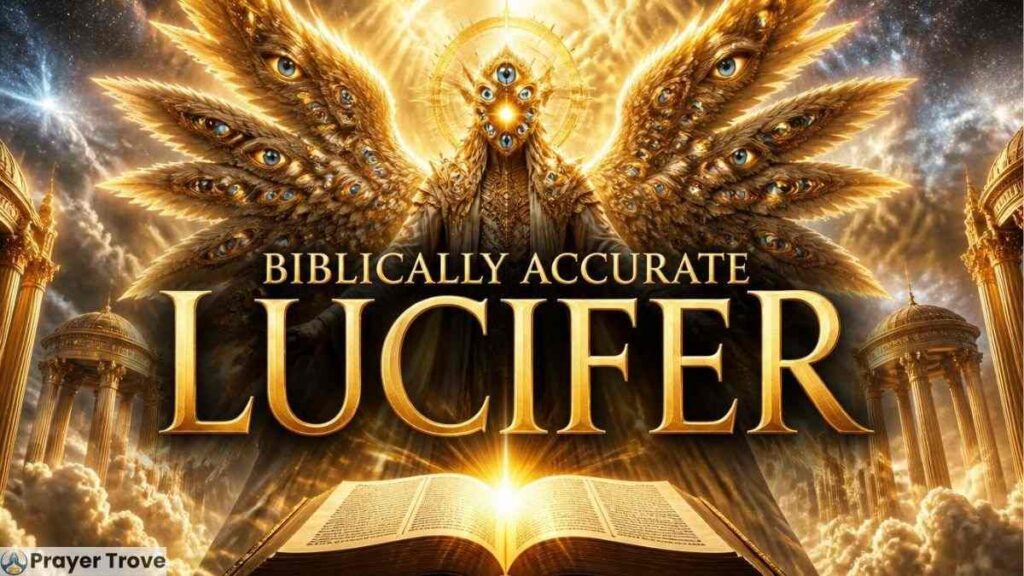
Most people think of Lucifer as a red creature with horns, a tail, and a pitchfork. But that image comes from art, movies, and centuries of tradition. It is not what the Bible actually describes.
When you look at what Scripture really says, you find something very different. In traditional Christian understanding, the biblically accurate Lucifer is a being of extraordinary beauty, wisdom, and heavenly glory who fell through pride. He was once a high-ranking angel in heaven.
Understanding who Lucifer really is means looking past cultural misconceptions and reading what the Bible actually says. It also means understanding where tradition has added interpretations that the text itself does not directly state. This article explores both the biblical text and the traditional interpretations that have shaped Christian understanding.
Biblically Accurate Understanding of Lucifer
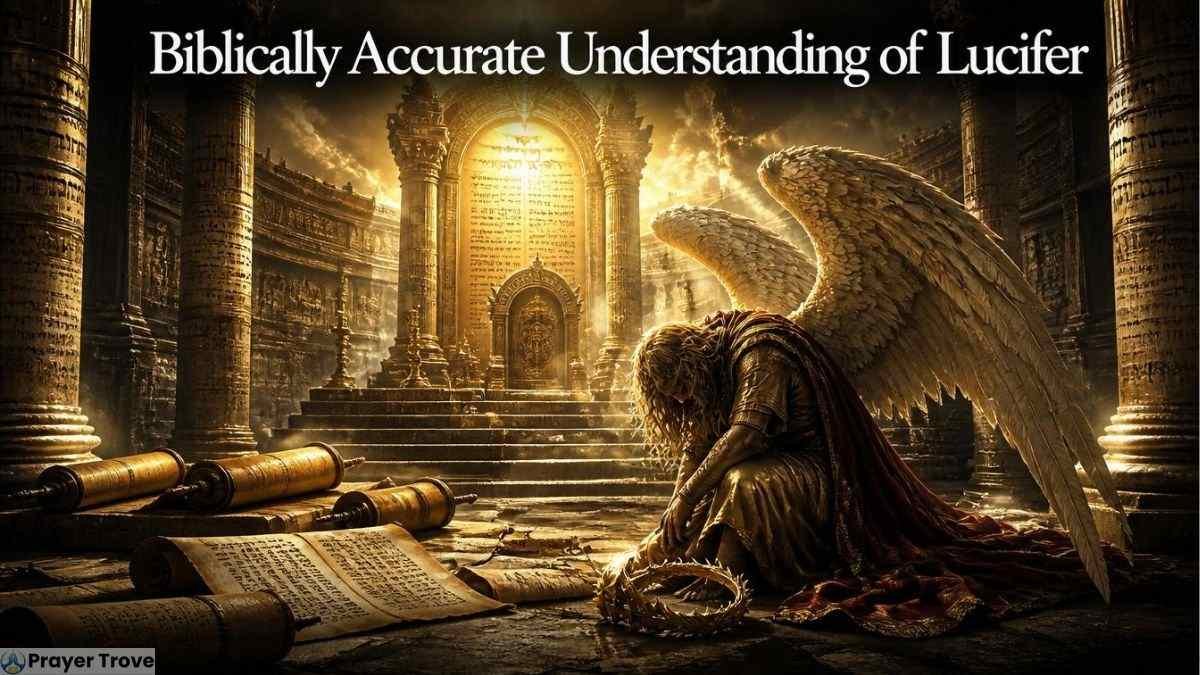
To understand Lucifer biblically, you have to start with what the Bible actually says about him. The popular image of a red, horned devil does not come from scripture. It comes from later traditions and cultural imagination.
The Bible describes a being of great beauty and power. In traditional Christian understanding, this being was created perfect and held one of the highest positions in heaven. But his heart became proud because of his splendor. That pride led to rebellion. And rebellion led to his fall.
The story is not just about evil. It is about how something beautiful can become corrupted. It is about how pride destroys even the most gifted among us. Understanding this helps us take the warning seriously.
Who Lucifer Is According to the Bible
The Bible presents Lucifer as a created being. He was not God. He was not equal to God. In traditional Christian interpretation, he was a high-ranking angel, but he was still a creature.
Before his fall, Lucifer held a position of extraordinary honor. Ezekiel 28 describes a figure who was a “guardian cherub.” Cherubim are powerful heavenly beings associated with God’s presence. They stand close to God’s throne.
Ezekiel 28 describes this figure as “the seal of perfection.” The passage says he was “full of wisdom and perfect in beauty.” These are strong words. They show a being who was not flawed or weak. In traditional understanding, he was among the most glorious of all God’s creations.
But being the most glorious did not protect him. Beauty and wisdom are gifts. They are not guarantees of loyalty. The figure looked at his own glory and forgot where it came from. He began to think he deserved worship. And that was the beginning of his downfall.
The Meaning of the Name Lucifer
The name “Lucifer” does not appear in the original Hebrew text of the Bible. It comes from Latin.
The Hebrew word in Isaiah 14:12 is Helel. This word means “shining one” or “morning star.” In the ancient world, people used the morning star to describe the planet Venus. Venus is the brightest object in the sky just before sunrise. It shines brilliantly, but when the sun rises, it disappears.
The name “Lucifer” came much later. In 383 AD, a scholar named Jerome translated the Bible into Latin. When he reached Isaiah 14:12, he translated Helel as Lucifer. The word comes from two Latin words: lux (light) and ferre (to carry). Together they mean “light-bearer.”
Jerome did not intend “Lucifer” as a personal name. He was using it as a description. It was meant to capture the meaning of “morning star” in Latin. But over time, Christians began to treat it as a proper name.
Helel and the Hebrew Meaning Behind Lucifer
To understand the original Hebrew, you have to look at the exact words used in Isaiah 14:12. The phrase is Helel ben Shachar.
Helel comes from a root word that means “to shine” or “to radiate.” It describes something bright and glorious. Ben means “son of.” Shachar means “dawn” or “morning.” So the full phrase means “shining one, son of the dawn.”
This is poetic imagery. It is not a name. It is a description. The prophet Isaiah was using the morning star as a symbol. The morning star appears bright and powerful. But it falls from the sky when the sun rises. In the same way, the proud king of Babylon would fall from power.
The image is powerful because it shows the contrast between human pride and divine judgment. No matter how high a person rises, God is higher. No matter how bright a star shines, the sun is brighter. The morning star only shines because of the sun’s light. When it tries to replace the sun, it disappears.
How Lucifer Became a Name in Christian Tradition
The word “Lucifer” entered Christian tradition through Jerome’s Latin translation. But it took time for people to treat it as a name.
When the King James Bible was translated in 1611, it kept the Latin word “Lucifer.” English readers began to see it as a proper name. They did not know it was a translation of a Hebrew description.
Over time, Christian tradition linked this “Lucifer” with Satan. Preachers, teachers, and commentators began to connect the “morning star” in Isaiah 14 with the “adversary” in other parts of the Bible. Passages like Luke 10:18, where Jesus says He saw Satan fall from heaven, seemed to confirm the connection.
By the Middle Ages, most Christians assumed that Lucifer and Satan were the same being. This became the traditional view. But it is important to remember that this view developed over time. It was not immediately obvious to the earliest Christians. Some early writers connected the passages. Others did not. The identification became more common as Christian theology developed, but it remains a matter of interpretation rather than a direct statement from scripture.
Lucifer and Satan in Biblical Interpretation
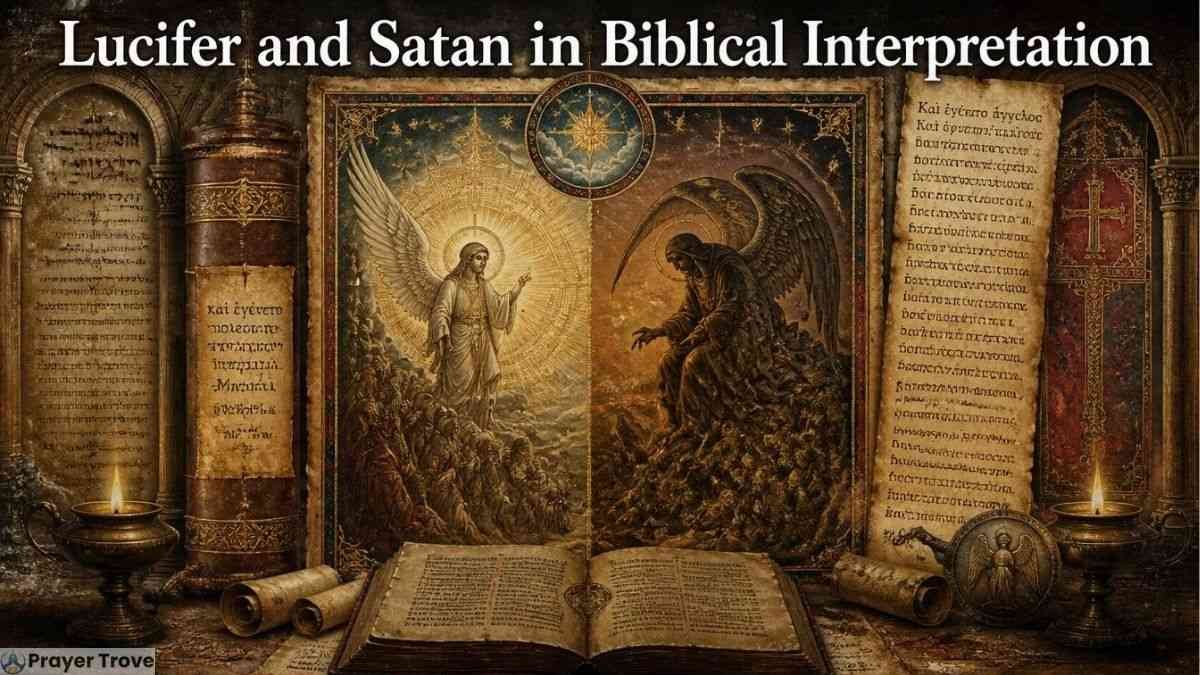
One of the most confusing things about this topic is the relationship between Lucifer and Satan. Many people use these names interchangeably. But is that what the Bible does?
The Bible does not use the name “Lucifer” to refer to Satan. In fact, the Bible never uses the name “Lucifer” at all in the original languages. It appears only in later translations.
“Satan,” on the other hand, appears many times in both the Old and New Testaments. The word means “adversary” or “accuser.” It is a title, not a proper name.
Understanding the difference between these terms helps us read the Bible more carefully. It also helps us see where tradition has added things that scripture does not say.
The Traditional Connection Between Lucifer and Satan
The traditional Christian view is that Lucifer was the name of the devil before his fall. After he rebelled and was cast out of heaven, he became known as Satan.
According to this view, Lucifer was the glorious figure described in Isaiah 14 and Ezekiel 28. He was the most beautiful and wise of all God’s creations. But he became proud and rebelled. God cast him out of heaven. From that point on, he was called Satan, the adversary.
This view draws on several biblical passages. Isaiah 14:12-15 describes a fall from heaven. Ezekiel 28:12-17 describes a beautiful, perfect being who became corrupt. Luke 10:18 records Jesus saying He saw Satan fall from heaven. Revelation 12:7-9 describes a war in heaven.
For centuries, Christian theology has connected these passages to tell one story: a glorious angel rebelled, fell, and became Satan. This story has been taught in churches, written about in theology books, and depicted in art.
Biblical Passages Used to Connect Lucifer With Satan
Many Bible passages have been used to support the traditional connection between Lucifer and Satan. Here is a table showing the most important ones:
| Passage | What It Says | Traditional Interpretation |
|---|---|---|
| Isaiah 14:12-15 | “How you have fallen from heaven, O morning star… You said in your heart, ‘I will ascend to heaven… I will make myself like the Most High.'” | This describes Lucifer’s pride and his fall from heaven. The passage is understood as pointing beyond the King of Babylon to a spiritual reality. |
| Ezekiel 28:12-17 | “You were the seal of perfection, full of wisdom and perfect in beauty… Your heart became proud on account of your beauty.” | This describes a guardian cherub’s pre-fall glory and how pride corrupted him. The passage is understood in traditional interpretation as referring to Lucifer. |
| Luke 10:18 | “I saw Satan fall like lightning from heaven.” | Jesus confirms that Satan fell from heaven, connecting him with the fallen figure in Isaiah. |
| Revelation 12:7-9 | There was war in heaven. The dragon and his angels were cast down. | This describes the cosmic conflict and the fall of Satan and his followers. |
These passages form the basis for the traditional view. Together, they tell a consistent story: a glorious angel rebelled, fell, and became the enemy of God and humanity.
Why Some Scholars Distinguish Lucifer From Satan
Not all scholars agree that Lucifer and Satan are the same being. There are several reasons why some scholars make a distinction.
First, the Hebrew word Helel in Isaiah 14 appears only once in the entire Old Testament. It is not a common term. Many Old Testament scholars argue that Isaiah 14 was originally about the King of Babylon. They say the passage describes a human ruler, not a fallen angel.
Second, the context of Isaiah 14 supports this reading. The chapter begins with a prophecy against Babylon. It says, “You will take up this taunt against the king of Babylon.” The passage addresses a human ruler. It describes his pride, his cruelty, and his eventual downfall.
Third, the description in Ezekiel 28 also addresses a human ruler. The chapter begins with a prophecy against the king of Tyre. The passage says, “Son of man, raise a lamentation over the king of Tyre.” Again, the immediate context is a human ruler.
Fourth, some scholars believe the Lucifer-Satan connection came from Jewish writings outside the Bible. Books like The Life of Adam and Eve (written between 100 BC and 200 AD) began to connect Satan with the morning star. These ideas influenced Christian tradition, but they are not directly from scripture.
The Development of the Lucifer-Satan Identification
The identification of Lucifer with Satan developed slowly over many centuries.
Early Christian writers like Tertullian (2nd century) and Origen (3rd century) began connecting Isaiah 14 with Satan’s fall. They saw the passage as describing a spiritual reality behind the human king of Babylon.
By the 4th century, Jerome’s Latin Vulgate used “Lucifer” in Isaiah 14:12. This translation choice helped fix the name in Christian tradition.
By the time of the King James Bible in 1611, the connection was firmly established in English-speaking Christianity. Most people assumed that Lucifer and Satan were the same being.
But some voices disagreed along the way. The Protestant reformers, including Martin Luther, questioned whether Isaiah 14 was really about a fallen angel. Luther argued the passage was a political taunt against Babylon. He thought the traditional interpretation went beyond what the text actually said.
Today, many modern Bible translations avoid the word “Lucifer” altogether. The NIV, ESV, and NLT use “morning star” or “day star” instead. This reflects a return to the original Hebrew meaning. It does not settle the theological question, but it shows a desire to be faithful to the original text.
The Biblical Context of Lucifer in Isaiah 14
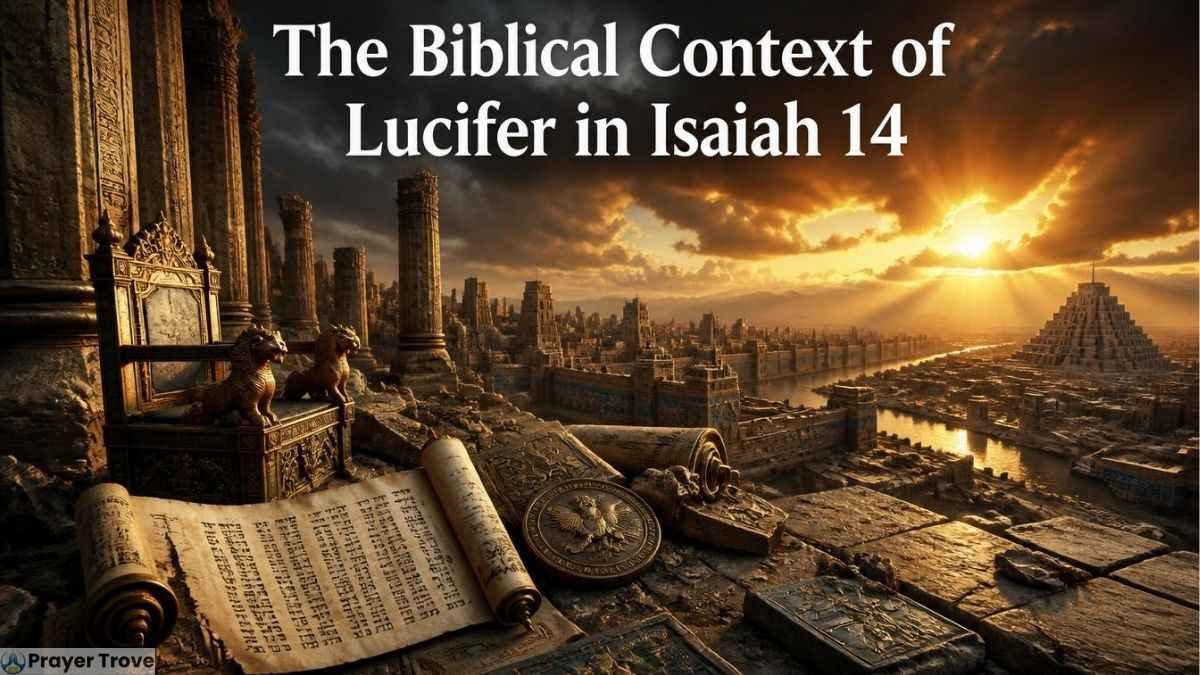
Isaiah 14 is one of the most important passages for understanding the biblical figure of Lucifer. But to read it correctly, you have to understand its context.
The chapter opens with a prophecy against Babylon. The prophet Isaiah is speaking to the people of Israel. They have been conquered by Babylon. They are living in exile. Isaiah gives them a message of hope: Babylon will fall.
The king of Babylon was a symbol of pride and cruelty. He conquered nations. He built great cities. He thought of himself as a god. Isaiah’s prophecy warned that this pride would lead to destruction.
But the passage also uses language that goes beyond any human king. It describes a being who wanted to ascend to heaven and sit on the throne of God. This is why traditional interpreters saw a reference to a fallen angel.
The Historical Context of the King of Babylon
To understand Isaiah 14, you have to know something about ancient Babylon.
Babylon was the dominant empire of its time. It controlled most of the ancient Near East. Its kings had tremendous power and wealth. They built towering structures and conquered nations. They demanded tribute from other peoples.
The king of Babylon was not just a political ruler. He was also a religious figure. Babylonian kings often claimed divine status. They built temples and offered sacrifices to their own glory.
Isaiah’s prophecy was a direct challenge to this arrogance. He said that the king of Babylon would be brought low. He would fall just like the morning star falls from the sky. This was a message of hope for Israel. Even the mightiest empire would not escape God’s judgment.
Archaeological evidence confirms the historical importance of Babylon and its eventual fall to the Persian Empire in 539 BC. Isaiah’s words reflected a real historical outcome, even as they used poetic language to make their point.
The Morning Star Symbolism in Isaiah 14
The morning star was a powerful symbol in the ancient world. People saw it as the brightest object in the sky. It appeared just before dawn and disappeared when the sun rose.
Kings and rulers often compared themselves to the morning star. They wanted to be seen as brilliant, powerful, and above all others. The image conveyed glory, honor, and supreme position.
Isaiah used this image to show the contrast between human pride and divine judgment. The king of Babylon thought he was like the morning star. He thought he was untouchable. But God was like the sun. When the sun rises, the morning star disappears. In the same way, God’s judgment would destroy the pride of Babylon.
The symbolism also points to something deeper. Pride that reaches for the heavens will always crash back to earth. No matter how high a person rises, God is higher.
The Five “I Will” Statements and the Theme of Pride
Isaiah 14:13-14 records five statements that begin with “I will.” These statements reveal the heart of pride.
“I will ascend to heaven” — This is the first step. The being refuses to stay in his appointed position. He wants to go higher.
“I will raise my throne above the stars of God” — This is a claim of authority. The stars of God represent the angels. The being wants to rule over them.
“I will sit on the mount of assembly” — This is a demand for worship. The mount of assembly is where God meets with His angels. The being wants to take God’s place.
“I will ascend above the heights of the clouds” — This is a desire to surpass divine glory. The clouds represent God’s presence. The being wants to go beyond them.
“I will make myself like the Most High” — This is the ultimate act of rebellion. The being does not just want to be like God. He wants to replace God.
These five statements show a clear progression. It starts with ambition. It moves to claiming authority. It progresses to demanding worship. It culminates in open rebellion.
| “I Will” Statement | Meaning |
|---|---|
| “I will ascend to heaven” | Refusing to stay in his position |
| “I will raise my throne above the stars of God” | Claiming authority over other angels |
| “I will sit on the mount of assembly” | Demanding worship that belongs only to God |
| “I will ascend above the heights of the clouds” | Seeking to surpass God’s glory |
| “I will make myself like the Most High” | Open rebellion against God |
These statements represent the heart of all pride. Anyone who puts themselves above God is following the same path.
Traditional Christian Interpretation of Lucifer’s Fall
The traditional Christian interpretation sees Isaiah 14 as describing Lucifer’s fall in two layers.
Layer 1: The Historical King
The immediate context is the king of Babylon. He was a proud, cruel ruler. His arrogance led to his downfall. This is the historical meaning of the passage.
Layer 2: The Spiritual Reality
Behind the human king, there was a spiritual power. The pride of Babylon reflected the pride of a fallen angel. This is the deeper, spiritual meaning of the passage.
According to this interpretation, Lucifer was a created angel of the highest rank. His pride led him to rebel against God. The five “I will” statements express his ambition. God’s response was swift and total. Lucifer was cast out of heaven.
This interpretation has shaped Christian teaching for centuries. It remains the dominant view in many churches today. However, it is important to note that other scholars read Isaiah 14 primarily as a historical prophecy against Babylon. They see the fallen morning star as a poetic description of the king’s downfall, not necessarily as a reference to a fallen angel.
The Biblical Context of Lucifer in Ezekiel 28

Ezekiel 28 is another important passage often connected with Lucifer. Like Isaiah 14, it addresses a human ruler. But it also uses language that points beyond human history.
The chapter begins with a prophecy against the king of Tyre. Tyre was a wealthy, powerful city. Its king had great influence. But Ezekiel’s prophecy goes beyond anything a human king could claim.
The passage describes someone who was in Eden, the garden of God. It mentions precious stones, anointing, and being a “guardian cherub.” No human king fits this description. The language points to something beyond human history.
The King of Tyre and the Passage’s Historical Context
Tyre was a city on the coast of modern-day Lebanon. It was a major port and trading center. Its wealth came from shipping and commerce. The king of Tyre was known for his pride and arrogance.
Ezekiel’s prophecy warned that Tyre would fall. Its wealth would not protect it. Its pride would lead to destruction. The king would be brought low.
But the language of Ezekiel 28 goes beyond human history. The passage describes someone who was in Eden, the garden of God. This is not a description of any human king. Eden was the place where God walked with Adam and Eve. It was the place of perfect fellowship with God.
The passage also describes someone covered in precious stones. It says, “Every precious stone adorned you: ruby, topaz, emerald, chrysolite, onyx, jasper, lapis lazuli, turquoise, and beryl.” These stones represent honor, glory, and closeness to God.
Most importantly, the passage describes someone as a “guardian cherub.” Cherubim are powerful heavenly beings associated with God’s presence. No human king has ever been called a cherub.
These details suggest that the passage is describing a spiritual being. The king of Tyre was an example of this spiritual reality. But the reality itself is greater than any human ruler.
Beauty, Perfection, and the Corruption of Pride
Ezekiel 28:12-15 describes a being of extraordinary beauty and wisdom:
- “You were the seal of perfection”
- “Full of wisdom and perfect in beauty”
- “You were in Eden, the garden of God”
- “Every precious stone adorned you”
- “You were anointed as a guardian cherub”
These are strong words. The being was not just good. He was perfect. He was not just wise. He was full of wisdom. He was not just beautiful. He was perfect in beauty.
But this perfection did not last. Verse 17 says, “Your heart became proud on account of your beauty, and you corrupted your wisdom because of your splendor.”
The very gifts God gave became the instruments of destruction. Beauty led to pride. Wisdom became corrupted. The being who had everything lost everything.
This is one of the most important lessons in all of scripture. Gifts are not guarantees. Beauty, wisdom, and position are good gifts from God. But they can be misused. When we forget that they are gifts, we become proud. And pride leads to destruction.
The Traditional Interpretation of Ezekiel 28 as Lucifer’s Fall
Traditional Christian interpretation sees Ezekiel 28 as describing Lucifer’s fall in two layers.
Layer 1: The Historical King
The immediate context is the king of Tyre. He was a proud ruler who thought he was a god. God would judge him for his arrogance.
Layer 2: The Spiritual Reality
Behind the human king was a spiritual reality. The passage describes a guardian cherub who fell through pride. This is understood in traditional interpretation as Lucifer.
The language supports this reading. No human king is ever called a “cherub” in scripture. No human ruler is described as being in Eden or created perfect. These details point to a supernatural being.
Early Christian writers, including Tertullian, Origen, and Augustine, recognized a supernatural referent in this passage. They saw it as describing the fall of a high-ranking angel.
The passage also connects with Isaiah 14. Together, they present a consistent picture: a glorious being, created perfect, who fell through pride and was cast out of God’s presence.
However, some modern scholars interpret these passages differently. They see the language as poetic hyperbole addressed to the human king. They argue that the description of a cherub in Eden is metaphorical language, not a literal description of a fallen angel.
Lucifer Fall From Glory
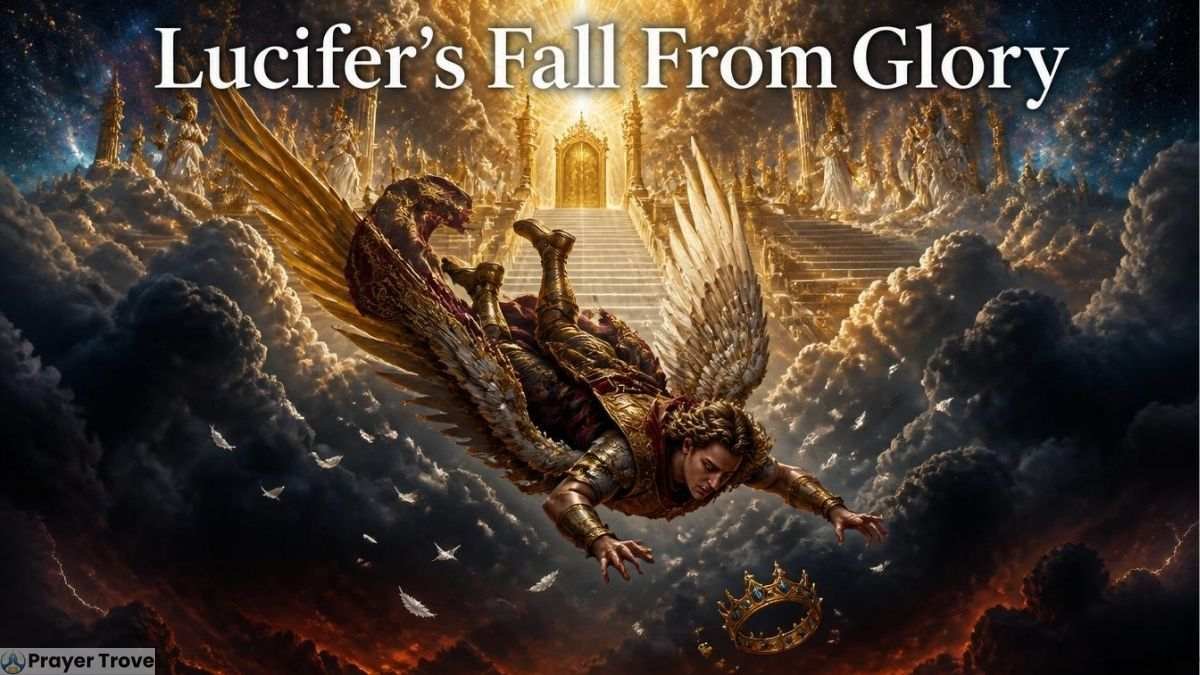
The fall of Lucifer is one of the most dramatic events described in traditional Christian interpretation. It marks the moment when a glorious being became the enemy of God. It is also connected with the origin and spread of evil in the world.
Understanding the fall means understanding what caused it and what the consequences were. The Bible gives us some information, but much of the detail comes from traditional interpretation.
Lucifer’s Pride and Rebellion Against God
Pride was the root of Lucifer’s fall according to traditional interpretation. Not weakness. Not temptation from outside. Pride in what he had been given.
Ezekiel 28:17 states it plainly: “Your heart became proud on account of your beauty.” The figure looked at his own glory and forgot where it came from. He began to believe that his beauty, wisdom, and position were his own achievements.
The five “I will” statements in Isaiah 14 reveal the progression of this pride. What started as admiration of self became a desire to replace God. The being did not just want more power. He wanted to be God.
This is the essence of all sin in Christian theology. Sin is putting yourself in the place of God. It is deciding that you know better. It is refusing to submit to God’s authority.
The Traditional Account of Lucifer’s Expulsion From Heaven
According to traditional interpretation, Lucifer’s rebellion was met with immediate judgment. God cast him out of heaven.
Isaiah 14:15 declares, “But you will be brought down to Sheol, to the far reaches of the Pit.” This is a picture of complete and total defeat. The one who wanted to ascend to heaven was brought down to the deepest depths.
Ezekiel 28:16 says, “I drove you in disgrace from the mountain of God.” The expulsion was not just a change of location. It was a loss of honor and position.
Jesus confirmed this event in Luke 10:18. He said, “I saw Satan fall like lightning from heaven.” The word “fall” suggests a sudden, violent descent. The word “lightning” suggests speed and total destruction.
In traditional interpretation, this fall was decisive and permanent. The choice was final, and its consequences were lasting.
The Consequences of Lucifer’s Fall
In traditional Christian understanding, the consequences of Lucifer’s fall were severe and far-reaching:
- Loss of glory: His beauty and splendor were taken away. The being who was perfect in beauty became a figure of corruption and deception.
- Expulsion from heaven: He was cast out of God’s presence.
- Becoming the adversary: His role changed from praising God to opposing Him. He became known as Satan, the adversary and accuser.
- Eternal judgment: His final destiny is the lake of fire. Revelation 20:10 describes a future judgment for the devil and his angels.
- Corrupting others: He did not fall alone. He drew others into his rebellion. He became the leader of a spiritual army.
The fall was not just personal. It had cosmic consequences. The rebellion of one angel led to the corruption of many. It also led to the temptation and fall of humanity in the Genesis account.
The One-Third of the Angels Interpretation
Revelation 12:4 describes a dragon whose tail “swept a third of the stars out of the sky and flung them to the earth.” Many interpreters understand the “stars” as angels.
According to this interpretation, one-third of the angels followed the dragon in his rebellion. They became demons. They joined him in opposing God and corrupting humanity.
This interpretation is based on the symbolism of stars representing angels. In Revelation 1:20, stars are explicitly interpreted as angels. So it is natural to read the “third of the stars” as a third of the angels.
But this interpretation is not universally accepted. Some scholars view the “third of the stars” as symbolic language. They argue that the book of Revelation is highly symbolic. It should not be read as a literal account of historical events.
For many Christians, however, this passage explains the origin of demons. It shows that the dragon was not alone in his rebellion.
Biblically Accurate Lucifer Appearance
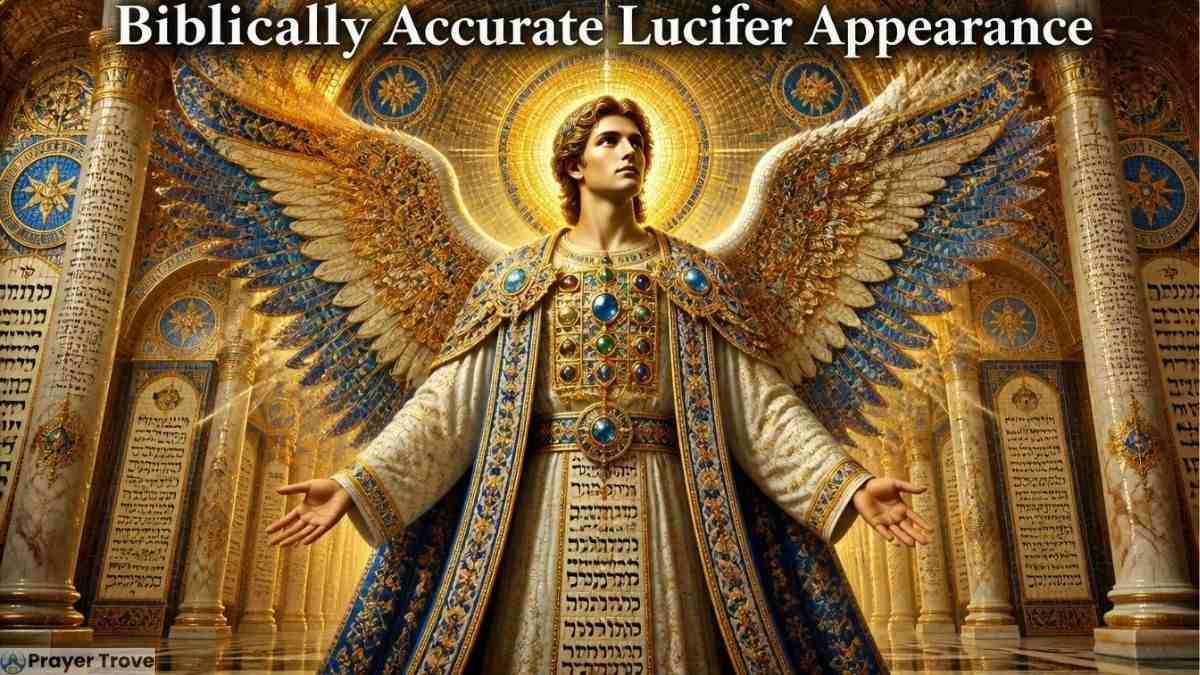
One of the most common questions about Lucifer is: What did he look like? The answer might surprise you.
The Bible does not describe a red, horned creature. It describes a being of light and beauty. The popular image of a devil with horns, a tail, and a pitchfork comes from art and tradition, not from scripture.
Lucifer’s Appearance Before the Fall in Traditional Interpretation
Before his fall, Lucifer was a being of extraordinary beauty according to traditional interpretation. Ezekiel 28 describes him as “perfect in beauty.” He was covered in precious stones: ruby, topaz, emerald, and more.
These stones are the same ones that were on the high priest’s breastplate. They represent honor, glory, and closeness to God. The figure wore them as signs of his high position.
He was also described as a “guardian cherub.” Cherubim are powerful heavenly beings associated with God’s presence. They stand close to God’s throne and reflect His glory.
The name “Lucifer” itself means “light-bearer” in Latin. This was not just a title. In traditional understanding, it described what he was: a being full of light. His very appearance reflected the glory of God.
The Symbolism of Beauty and Splendor in Biblical Passages
The biblical descriptions of the figure’s beauty are not just about physical appearance. They point to his status, wisdom, and position.
The precious stones represent honor and value. In the ancient world, precious stones were given as gifts to kings and rulers. They signified wealth and importance.
The description of Eden represents the presence of God. Eden was the place where God walked with Adam and Eve. It was the place of perfect fellowship.
The phrase “guardian cherub” indicates a high-ranking angelic role. Cherubim are powerful heavenly beings associated with God’s presence.
The phrase “stones of fire” represents divine glory. Fire is often used in the Bible to represent God’s presence. The burning bush, the pillar of fire, and the tongues of fire at Pentecost all point to God’s glory.
These symbols show a being who was not just beautiful. He was honored, trusted, and close to God.
The Bible’s Silence About Lucifer’s Exact Appearance
The Bible never gives a detailed physical description of the figure. It describes his glory, his beauty, and his position. But it does not say what he looked like.
This silence is important. The Bible focuses on who the figure was. It focuses on his character, his pride, and his rebellion. It does not focus on what he looked like.
The same is true after his fall. Scripture uses images like “roaring lion,” “ancient serpent,” and “dragon.” But these are symbolic descriptions. They are not physical portraits.
The Bible does not give us a description of Lucifer’s appearance because it is not important. What matters is his character and his choices.
The Origin of the Horns, Red Skin, and Pitchfork Image
The popular image of Lucifer as a red, horned creature with a pitchfork does not come from the Bible. It comes from outside the Bible.
The development of the horned devil image is complex. It draws from several sources:
- Pagan deities: Some ancient gods like Pan were depicted with horns. These images influenced medieval art.
- Medieval art: Artists depicted the devil as frightening and grotesque. They wanted to make evil look repulsive.
- Folklore: Stories about demons and evil spirits shaped popular imagination.
- Theatre and literature: Dante, Milton, and others created vivid images that stuck.
The red skin may have come from the association of evil with darkness and fire. The color red became associated with danger, sin, and evil.
The pitchfork developed through artistic tradition over time. It became a standard symbol of the devil through cultural evolution.
These images developed over centuries. They are part of cultural tradition, not biblical teaching. They have shaped how most people think about Lucifer, but they are not found in scripture.
What Lucifer Is Not According to Scripture
Many common beliefs about Lucifer are not found in the Bible. Understanding what Lucifer is not helps us understand what the Bible actually says.
The Red Devil Image and Its Cultural Origins
The red devil image is purely cultural. It has no basis in the Bible.
This image developed through several influences:
- Medieval art: Artists depicted the devil as frightening and grotesque.
- Pagan influences: Images of horned deities from other religions were blended with Christian imagery.
- Folklore: Stories about demons and evil spirits shaped popular imagination.
- Theatre and literature: Dante, Milton, and others created vivid images that stuck.
The Bible never describes Lucifer as red, horned, or carrying a pitchfork. These are additions from human imagination.
Common Myths About Lucifer’s Appearance
Many common beliefs about Lucifer’s appearance are not found in scripture:
- Red skin: Nowhere in the Bible
- Horns: Never mentioned
- Hooves: Not described anywhere
- Tail: No biblical basis
- Pitchfork: Completely absent from scripture
- Bat wings: Not in the Bible
- Ruler of hell: Scripture says he will be punished there, not rule it
These myths come from art, literature, and cultural tradition. They have shaped how most people think about Lucifer, but they are not biblically accurate.
Popular Culture Compared With Biblical Descriptions
The contrast between popular culture and biblical description is striking:
| Aspect | Popular Culture | Biblical Description |
|---|---|---|
| Appearance | Red skin, horns, tail, pitchfork | Being of light and beauty (in traditional understanding) |
| Location | Rules in hell | Cast out of heaven; destined for punishment |
| Nature | Obviously evil and frightening | Appears as an angel of light (2 Corinthians 11:14) |
| Role | King of the underworld | Adversary, accuser, tempter |
| Origin | Always evil | Created perfect, fell through pride (in traditional understanding) |
These differences show how far cultural tradition has drifted from biblical truth. The real figure is not a cartoon villain. He is portrayed as a subtle, deceptive, and dangerous figure in scripture.
Lucifer Image Through History and Art

The way Lucifer has been depicted in art and literature has changed dramatically over the centuries. Understanding this history helps us see how cultural tradition has shaped our thinking.
Early Christian and Medieval Depictions
Early Christian art often depicted the devil as a fallen angel. He was still beautiful, but cast down. Some images showed him as a pale or blue figure. He retained traces of his heavenly origin.
By the Middle Ages, this changed. Artists began depicting him as monstrous. He appeared with horns, claws, and terrifying features. The goal was to make evil look frightening.
Medieval art borrowed from various sources. Images from pagan mythology were blended with Christian imagery. The devil became a composite figure.
The Influence of Dante and Milton on Lucifer’s Image
Dante Alighieri’s Inferno (early 14th century) transformed how people imagined the devil. Dante described him as a giant, three-headed monster. He was frozen in ice at the center of hell. This image was dramatic and memorable, but it was not biblical.
John Milton’s Paradise Lost (1667) went further. Milton portrayed the devil as a tragic, heroic rebel. He was proud, eloquent, and almost sympathetic. This romanticized image shaped literature and art for centuries.
Milton’s devil is literary genius. He is not biblical truth. But millions of readers absorbed him as though he were scripture.
The Evolution of Lucifer Into the Modern Devil
The Victorian era added more layers. The devil appeared in theatre and illustration as a red, horned figure. The image became theatrical and exaggerated.
Hollywood took over in the 20th century. Films and television turned the devil into everything from a terrifying villain to a charming antihero. With each decade, the cultural image drifted further from the biblical description.
Today, most people know the devil from movies, not from scripture. The biblical figure has been replaced by a cultural caricature.
Biblical and Theological Meaning of Lucifer Fall
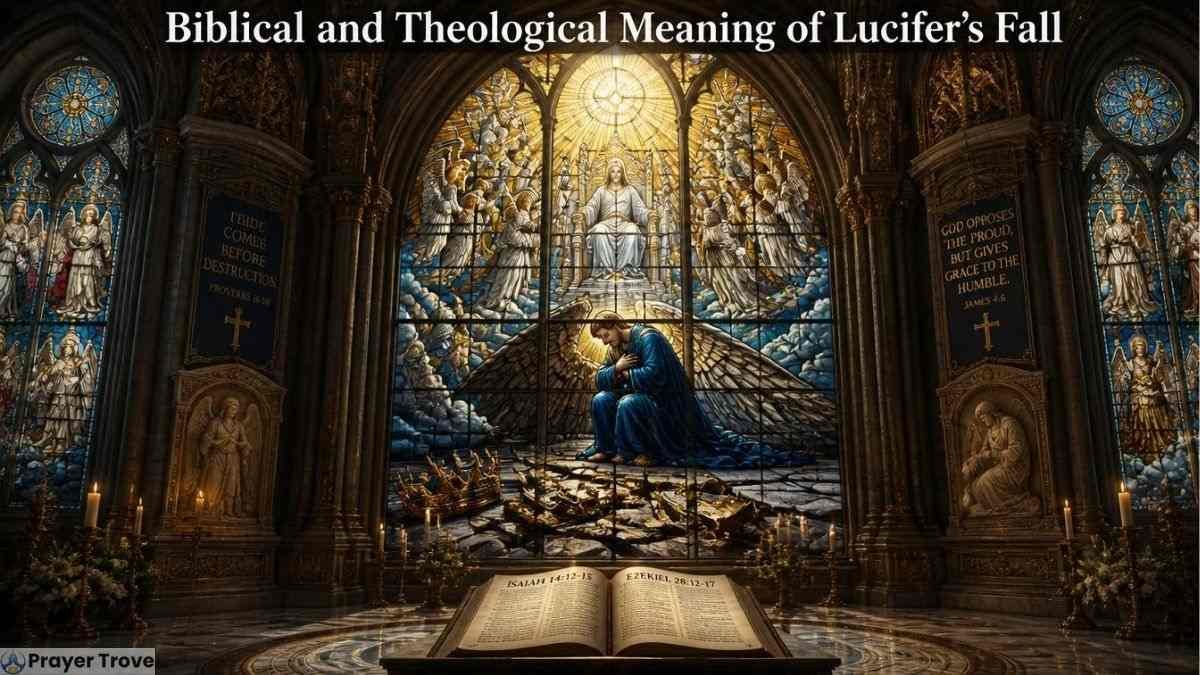
The story is not just ancient history. It has deep theological meaning. It teaches us about pride, free will, and the danger of forgetting where our gifts come from.
Pride as the Central Theme of Lucifer’s Fall
Pride is the central theme of this story. Not weakness. Not ignorance. Pride.
The figure was perfect, beautiful, and wise. He had everything. But he looked at his gifts and forgot where they came from. He began to believe he deserved worship.
Proverbs 16:18 says, “Pride goes before destruction, a haughty spirit before a fall.” This figure is the ultimate example of this truth. His story is a warning: no one is immune to pride.
The lesson is clear. Gifts are not guarantees. Beauty, wisdom, and position are good gifts from God. But they can be misused. When we forget that they are gifts, we become proud. And pride leads to destruction.
Free Will and the Nature of Rebellion
The story raises a difficult question: If God created this being perfect, how could he sin?
The answer in Christian theology lies in free will. God gave all created beings the freedom to choose. Love cannot exist without choice. Obedience cannot exist without the possibility of disobedience.
The figure used his free will to choose pride over gratitude. He chose self over God. The fall was not God’s doing. It was his choice.
This is a sobering truth. Even the highest angel could fall. No creature is beyond the danger of pride.
The Difference Between Biblical Text and Christian Tradition
It is important to distinguish between what the Bible actually says and what Christian tradition has added:
| Aspect | Biblical Text | Christian Tradition |
|---|---|---|
| Name | Helel (Hebrew); “shining one” | Lucifer (from Latin Vulgate) |
| Identity | Morning star; King of Babylon (Isaiah 14) | Often identified with Satan |
| Fall | Described in Isaiah 14 and Ezekiel 28 | Expanded through theology and literature |
| Appearance | Not described in detail | Horns, red skin, pitchfork (cultural) |
| Role | Created being who fell | Ruler of hell (cultural) |
Lessons About Pride, Humility, and Dependence on God
The story offers lasting lessons for everyone:
- Pride destroys: Even the most gifted can fall through pride
- Gifts are not guarantees: Beauty, wisdom, and position do not protect from sin
- Gratitude matters: Remembering that all good things come from God prevents pride
- Humility is protection: Recognizing dependence on God is the path to safety
- Warning for all: If such a being could fall, no one is immune
These lessons are not just for ancient angels. They are for every human being who has ever been gifted, elevated, or tempted to forget where their blessings come from.
Read Related Article : Biblically Accurate God
Conclusion
The biblically accurate Lucifer is not a red-horned monster. In traditional Christian understanding, he is a being of extraordinary beauty, wisdom, and heavenly glory who fell through pride. His story is one of the most sobering warnings in all of scripture.
Isaiah 14 and Ezekiel 28 describe figures who had everything and lost it all because they wanted more. The five “I will” statements reveal the heart of pride: the desire to replace God. In traditional interpretation, these passages point to the fall of a once-glorious angel.
The image of Lucifer as a red devil with a pitchfork comes from art and tradition, not from the Bible. Understanding what scripture actually says helps us see the real warning: pride destroys, and no one is immune.
Lucifer’s story is not just ancient history. It is a lesson for every person who has ever been gifted, elevated, or tempted to forget where their blessings come from. The path of humility leads to life. The path of pride leads to destruction.
Choose humility. Stay close to God. And never let your gifts become your god.
Frequently Asked Questions
What does the Bible say about Lucifer?
The Bible mentions Lucifer only in Isaiah 14:12, where the Hebrew word Helel means “shining one” or “morning star.” The passage describes a figure who fell from heaven through pride. In traditional Christian interpretation, this refers to a fallen angel, while other scholars see it primarily as a prophecy against the King of Babylon.
What are the differences between Lucifer and Satan in scripture?
“Lucifer” comes from a Latin translation of a Hebrew word meaning “morning star.” “Satan” is a Hebrew word meaning “adversary” or “accuser.” Whether they are the same being is a matter of traditional interpretation, not a direct statement from scripture. The traditional view connects them, but some scholars distinguish between the two.
Who was Lucifer before the fall?
According to traditional Christian interpretation, Lucifer was a high-ranking angelic being described in Ezekiel 28 as “the seal of perfection, full of wisdom and perfect in beauty.” He is understood as an anointed cherub who stood near God’s throne. Some scholars, however, interpret the passage as poetic language about the king of Tyre.
How did pride cause Lucifer’s fall?
In traditional interpretation, pride caused the figure to forget that his beauty, wisdom, and position were gifts from God. Ezekiel 28:17 says, “Your heart became proud on account of your beauty.” This pride led to rebellion and ultimately to his fall from heaven.
How did art change the perception of Lucifer?
Art transformed the biblical figure from a being of light and beauty into a red, horned monster. Medieval artists borrowed from various cultural sources. Dante and Milton created powerful literary images that shaped popular culture. Hollywood continued this trend, creating images far from the biblical description.