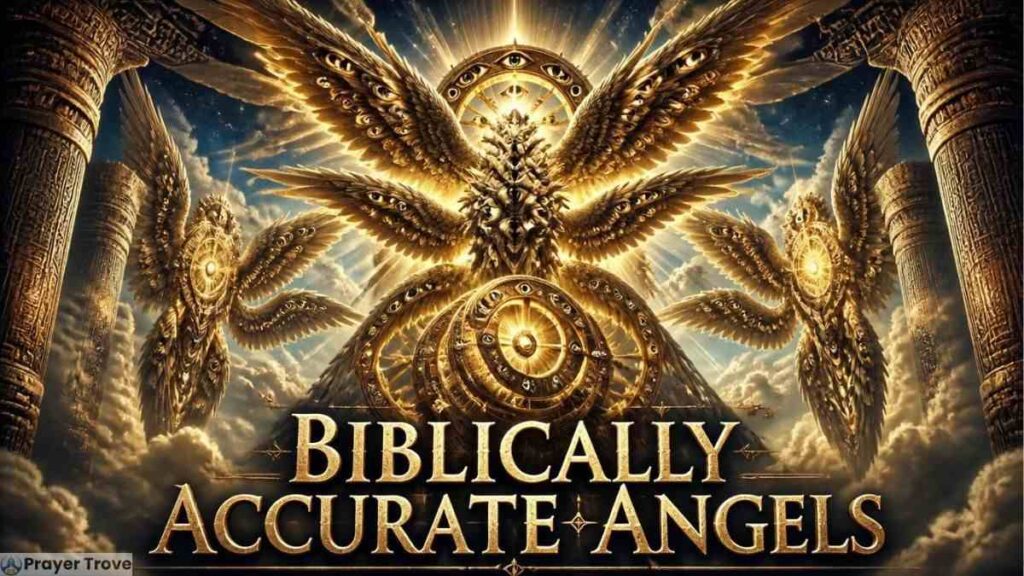
Most people picture angels as soft, glowing figures with white robes and feathered wings. That image shows up on Christmas cards, in movies, and in paintings hanging in old churches. But the Bible describes something very different. Biblical angels often have strange bodies, sharp weapons, and appearances so overwhelming that people fall to the ground in fear.
This article looks at what the Bible actually says about angels. It covers how they appear, what different types of angels exist, and how their real description compares to the pictures we see today.
Understanding Biblically Accurate Angels
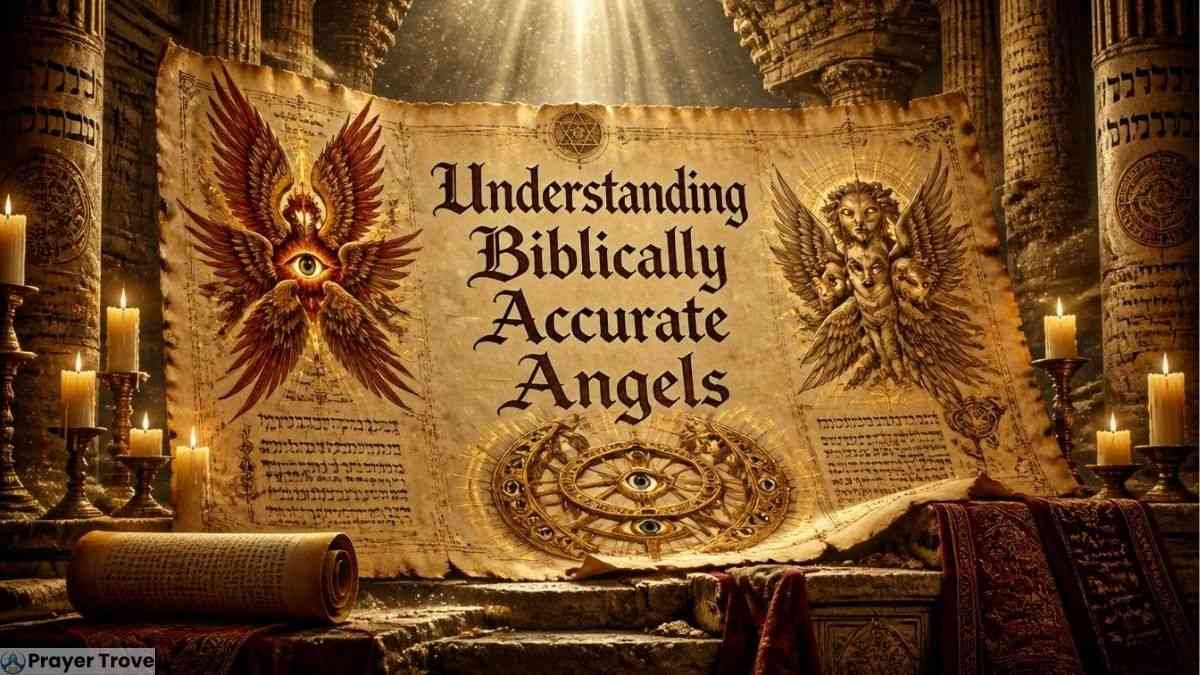
Angels show up throughout the Bible, from the first book to the last. They are not humans who died and turned into spirits. They are their own kind of created being, made before humans, and given jobs to do for God.
The Biblical Description of Angels
The Bible does not describe angels the same way every time. Some appear as ordinary men. Others have wings, faces of animals, or bodies covered in eyes. Hebrews 1:14 calls them “ministering spirits,” meaning they are spirit beings sent to help and serve. This spirit nature lets them take different forms depending on the job God gives them.
Biblical Angels vs Popular Angel Imagery
| Popular Image | Biblical Description |
|---|---|
| Human with two feathered wings | Some angels appear fully human; others have four or six wings |
| Soft, glowing, peaceful | Often described as frightening or overwhelming |
| Small baby-like cherubs | Cherubim have four faces and are guardians, not infants |
| Female or gentle appearance | Named angels are described in strong, masculine terms |
| Harp-playing background figures | Warriors, messengers, and agents of judgment |
Human-Looking Angels in Scripture
Not every angel looks strange. Many appear as regular men. Genesis 18 describes three visitors who came to Abraham and ate a meal with him. Nobody in the story realized right away that these were angels. Hebrews 13:2 later warns believers to be kind to strangers, since some people have helped angels without knowing it. This shows that angels can walk among people without drawing attention to themselves at all.
The Appearance of Biblically Accurate Angels
Angel descriptions in the Bible fall into a few patterns. Some angels look like men. Others have wings, fire, or features that are hard to picture. Looking at these patterns helps explain why Scripture’s angels feel so different from the ones in modern art.
Angels Appearing in Human Form
Angels appearing as men happen more than once in the Bible. Two angels visited Lot in Sodom and looked enough like ordinary travelers that a crowd tried to break into the house to harm them (Genesis 19). Judges 13 describes an angel appearing to a couple named Manoah and his wife, announcing the birth of their son Samson. In each case, the angel’s true identity is revealed only through what happens next, not through a glowing appearance.
Angels With Multiple Wings
Some angels in Scripture have far more than two wings. Isaiah 6:2 describes the seraphim this way:
- Two wings cover the face.
- Two wings cover the feet.
- Two wings are used for flying.
Ezekiel’s cherubim are described with four wings each, along with human-like hands underneath them (Ezekiel 1:6, 10:8). These extra wings are not just decoration. They show different actions the angel is doing at once: worship, humility, and readiness to move.
Angels Covered With Eyes
Ezekiel describes cherubim and the strange wheels beside them as covered with eyes (Ezekiel 10:12, 1:18). This detail can feel unsettling to read, and it’s meant to. The eyes point to God’s awareness of everything that happens. Nothing is hidden from him, and these beings that surround his throne reflect that truth in their very bodies.
Angels Surrounded by Fire and Light
Fire and brightness show up again and again around angels. Ezekiel’s living creatures move like burning coals, with fire flashing between them (Ezekiel 1:13). The seraphim’s name itself comes from a Hebrew word meaning “burning ones.” Matthew 28:3 describes the angel at Jesus’ tomb with an appearance like lightning, and clothes as white as snow. Fire in these passages often points to holiness and to God’s presence.
The Terrifying Appearance of Some Biblical Angels
Angel encounters in the Bible rarely feel calm at first. Guards at Jesus’ tomb became like dead men from fear when the angel appeared (Matthew 28:4). Daniel repeatedly fell face down when angels showed up to speak with him (Daniel 10:9). These reactions were not exaggerated fear. They were normal responses to beings whose appearance was far beyond anything the witnesses had seen before.
Types of Angels Described in the Bible
| Type | Key Feature | Main Passage |
|---|---|---|
| Seraphim | Six wings, fiery appearance | Isaiah 6 |
| Cherubim | Four faces, guardians of holy places | Genesis 3, Ezekiel 10 |
| Ophanim | Wheels covered in eyes | Ezekiel 1 |
| Living Creatures | Four faces, tied to God’s throne | Ezekiel 1, Revelation 4 |
| Archangels | Named leaders with major missions | Daniel, Jude, Revelation |
| General Angels/Messengers | Appear as men, deliver messages | Genesis, Judges, Acts |
Seraphim: Six-Winged Beings Around God’s Throne
Seraphim appear by name only in Isaiah 6, where Isaiah sees them flying around God’s throne and calling out his holiness. Their name likely comes from a root meaning “to burn,” which fits their fiery, radiant description.
Cherubim: Guardians of God’s Holy Presence
Cherubim guard sacred spaces. The first mention comes right after Adam and Eve are removed from Eden, when cherubim are placed at the entrance with a flaming sword (Genesis 3:24). Later, two cherubim are placed on top of the Ark of the Covenant, watching over the place where God’s presence would meet with Israel’s priests (Exodus 25:18-22).
Ophanim: The Mysterious Wheels Within Wheels
Ophanim, or wheel-like beings, appear beside Ezekiel’s living creatures. The word “ophan” simply means wheel. These are not vehicles the creatures ride on. They move on their own, guided by the same spirit that moves the living creatures next to them (Ezekiel 1:19-21).
Living Creatures in Ezekiel’s Vision
Ezekiel’s living creatures have four faces each: a human, a lion, an ox, and an eagle. Later, in Ezekiel 10:20, the prophet identifies these same beings as cherubim. This tells readers that “cherubim” and “living creatures” describe the same order of angel, seen from different angles or in different settings.
Archangels and Named Angels
| Angel | Role | Key Passage |
|---|---|---|
| Michael | Warrior, protector of Israel | Daniel 10, 12; Jude 9; Revelation 12 |
| Gabriel | Messenger of major announcements | Daniel 8-9; Luke 1 |
Only Michael and Gabriel are named directly as angels in most Protestant Bibles. Some other traditions, including Catholic and Orthodox ones, also recognize Raphael, who appears in the Book of Tobit, a text found in the Catholic and Orthodox biblical canons but not the Protestant one.
Messenger Angels and Heavenly Beings
Beyond the named archangels, the Bible describes countless unnamed angels who deliver messages, protect people, and carry out tasks. These general angels appear most often in the biblical story, from warning Joseph in a dream (Matthew 1:20) to freeing Peter from prison (Acts 12:7).
Seraphim and Their Biblical Appearance
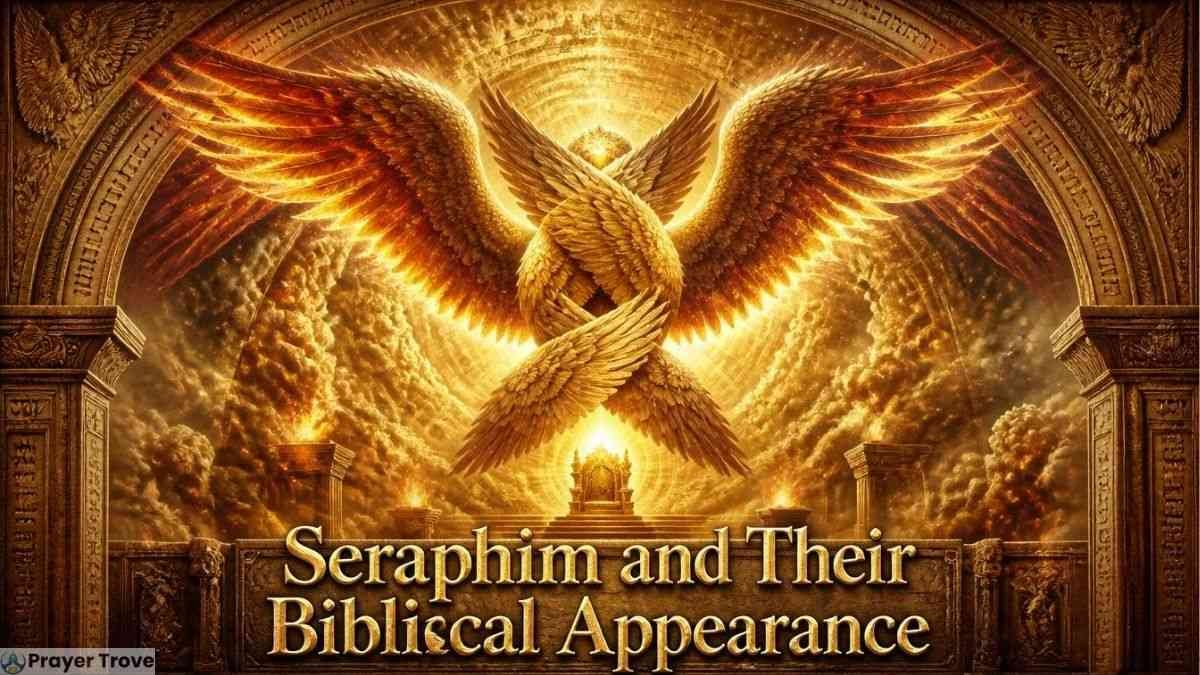
Seraphim only appear by name in one chapter of the Bible, but that scene gives readers a striking look at what angelic worship looks like at its highest level.
The Six Wings of the Seraphim
Each pair of wings has its own purpose:
- Two wings cover the face, showing that even seraphim cannot look directly at God’s glory
- Two wings cover the feet, a sign of humility before him.
- Two wings allow flight, showing they are ready to act the moment God commands
The Fiery Appearance of the Seraphim
The word seraphim likely means “burning ones.” This fits both their brightness and the fire imagery connected to God’s holiness throughout the Old Testament. Fire in Scripture often represents purity, since it burns away anything impure.
The Threefold Proclamation of God’s Holiness
Isaiah 6:3 records the seraphim calling to each other, “Holy, holy, holy is the Lord of hosts; the whole earth is full of his glory.” Repeating the word three times is a way Hebrew writers showed the highest possible degree of something. Here, it points to holiness beyond anything else in creation.
The Seraphim’s Role Before God’s Throne
Beyond worship, a seraph takes an active role in Isaiah’s story. One of them takes a burning coal from the altar and touches it to Isaiah’s lips, telling him his guilt is removed (Isaiah 6:6-7). This shows seraphim connected not just to praise, but also to purification.
Cherubim and Their Biblical Appearance
Cherubim are some of the most frequently mentioned angels in the Bible, yet they are also among the most misunderstood, largely because of how art has changed their image over time.
The Four Faces of the Cherubim
| Face | What It Represents |
|---|---|
| Human | Intelligence and relationship |
| Lion | Strength and royalty |
| Ox | Service and endurance |
| Eagle | Vision and swiftness |
Ezekiel 1:10 and 10:14 describe these four faces together on a single being, representing different qualities found across all of creation.
The Four Wings and Human-Like Hands
Along with four faces, Ezekiel’s cherubim have four wings and human-like hands underneath their wings (Ezekiel 1:8). The hands suggest the ability to act and do work, even though the overall form is far from human.
The Eyes Covering the Cherubim
Ezekiel 10:12 says the cherubim’s whole bodies, including their backs, hands, and wings, were covered with eyes. This detail connects cherubim to God’s complete awareness of everything happening in creation.
Cherubim in Ezekiel’s Vision
Ezekiel first describes these beings as “living creatures” in chapter 1, without naming them. By chapter 10, he identifies them clearly as cherubim, confirming that this is the same type of angel seen earlier in the vision.
Cherubim Guarding Eden and Holy Places
Cherubim consistently guard access to holy things. They stand at Eden’s entrance after Adam and Eve are sent away (Genesis 3:24), and their images are placed above the Ark of the Covenant, watching over the place where God’s presence rested among his people (Exodus 25:18-20).
Ophanim and the Biblical Wheel Angels
Ophanim are some of the strangest beings described in the Bible. Ezekiel struggles to find the right words for what he sees, which shows just how far outside normal experience these beings were.
Wheels Within Wheels
Ezekiel 1:16 describes a wheel that seems to have a second wheel inside it, crossing at right angles. This allowed the wheel to move in any direction without needing to turn first, matching the way the living creatures beside them also moved without turning.
Eyes Covering the Wheels
Ezekiel 1:18 says the rims of these wheels were “full of eyes all around.” Like the eyes on the cherubim, this detail points to complete awareness, tied closely to God’s throne moving through these wheels.
The Connection Between Ophanim and Ezekiel’s Vision
The wheels move only when the living creatures move, and they stop when the creatures stop (Ezekiel 1:21). This close connection shows that the wheels are not separate machines. They act together with the living creatures as part of one larger vision of God’s throne in motion.
The Biblical Meaning of Wheel Angels
Scholars generally read the wheels as part of a larger picture of God’s throne-chariot, a vision meant to show that God’s rule and presence can move anywhere, seeing everything as it goes. This is an interpretation drawn from the vision’s imagery, since Ezekiel does not explain the wheels’ full meaning directly.
Biblical Symbolism in Angelic Appearance
| Feature | Symbolic Meaning |
|---|---|
| Eyes | Complete awareness and watchfulness |
| Multiple wings | Reverence, humility, and readiness to act |
| Fire and light | Holiness and purification |
| Unusual, non-human forms | A being from a different order of creation than humans |
The Meaning of Eyes
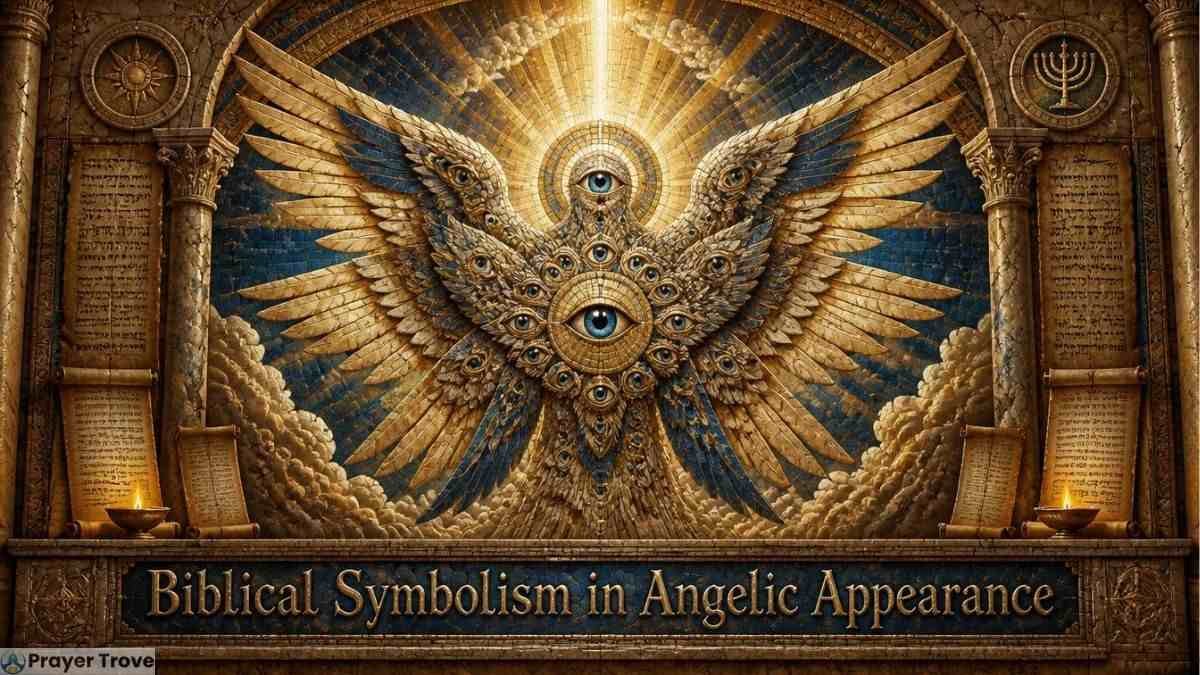
Eyes covering cherubim and wheels are widely understood to represent knowledge that misses nothing. This imagery appears strange to modern readers, but ancient readers likely understood it as a strong visual way to describe total awareness.
The Symbolism of Multiple Wings
Wings used for covering the face or feet show reverence and humility, even among powerful heavenly beings. Wings used for flight point to speed and readiness to carry out God’s commands without delay.
The Meaning of Fire and Light
Fire and brightness connect angels to God’s own presence, which is often described using similar imagery, such as the burning bush in Exodus 3 or the pillar of fire that led Israel through the wilderness (Exodus 13:21).
The Significance of Unusual Angelic Forms
Strange angelic forms remind readers that these beings belong to a different category of creation entirely. Their appearance is not meant to look human or familiar. It is meant to show that they come from, and serve, a reality beyond the physical world people usually experience.
Angels Appearing in Human Form
While many angels look nothing like humans, plenty of biblical angels appear as ordinary men, blending in until their message or action reveals who they really are.
Angels Appearing as Men in Genesis
Genesis 18 describes three visitors approaching Abraham’s tent. Abraham treats them as honored guests, offering food and rest, before realizing over the course of the conversation that he is speaking with the Lord and two angels.
Angels Visiting Lot in Sodom
The same two angels from Genesis 18 continue on to Sodom in Genesis 19, where Lot meets them at the city gate. They appear human enough that the men of the city try to force their way into Lot’s house, not realizing who they are dealing with until the angels strike the attackers with blindness.
Angels at the Resurrection of Jesus
Luke 24:4 describes two men in dazzling clothing appearing to the women at Jesus’ empty tomb. Matthew’s account instead describes one angel whose appearance was like lightning (Matthew 28:2-3). Both descriptions point to the same event, shown from slightly different angles.
The Human Appearance of Biblical Messengers
Across the Bible, angels take human form specifically when their task calls for direct conversation or close interaction with people. A human appearance lets the angel deliver a message or complete a task without overwhelming the person they are visiting.
Biblically Accurate Angels vs Modern Angel Images
The gap between Scripture and popular art did not appear overnight. It built up gradually over many centuries of paintings, sculptures, and, eventually, film.
White Robes and Two-Winged Angel Imagery
The familiar image of an angel in a flowing white robe with two feathered wings comes largely from centuries of Western art, not directly from biblical description. Many general angels in Scripture actually appear with no wings mentioned at all, since they take ordinary human form.
The Origins of Baby Angels and Cherubs in Art
Chubby winged babies, often called putti, come from Greek and Roman art traditions, not from the Bible’s description of cherubim. Renaissance artists borrowed this imagery and, over time, people began calling these figures “cherubs,” even though they look nothing like the four-faced guardians described in Ezekiel.
The Influence of Renaissance Art on Angel Imagery
Renaissance painters aimed to create beauty and emotional warmth in religious art. Artists such as Raphael painted angels as graceful young people with soft, human features. This style became so common that many people today assume it reflects what the Bible actually says.
Biblical Descriptions Compared With Traditional Artwork
| Traditional Artwork | Biblical Description |
|---|---|
| Soft, human, often youthful | Ranges from ordinary men to strange, multi-faced beings |
| Two small wings | Some angels have four or six wings; others have none mentioned |
| Peaceful, calm presence | Often triggers fear in the people who see them |
| Chubby infant cherubs | Four-faced guardians covered in eyes |
Fear and Human Reactions to Biblical Angels
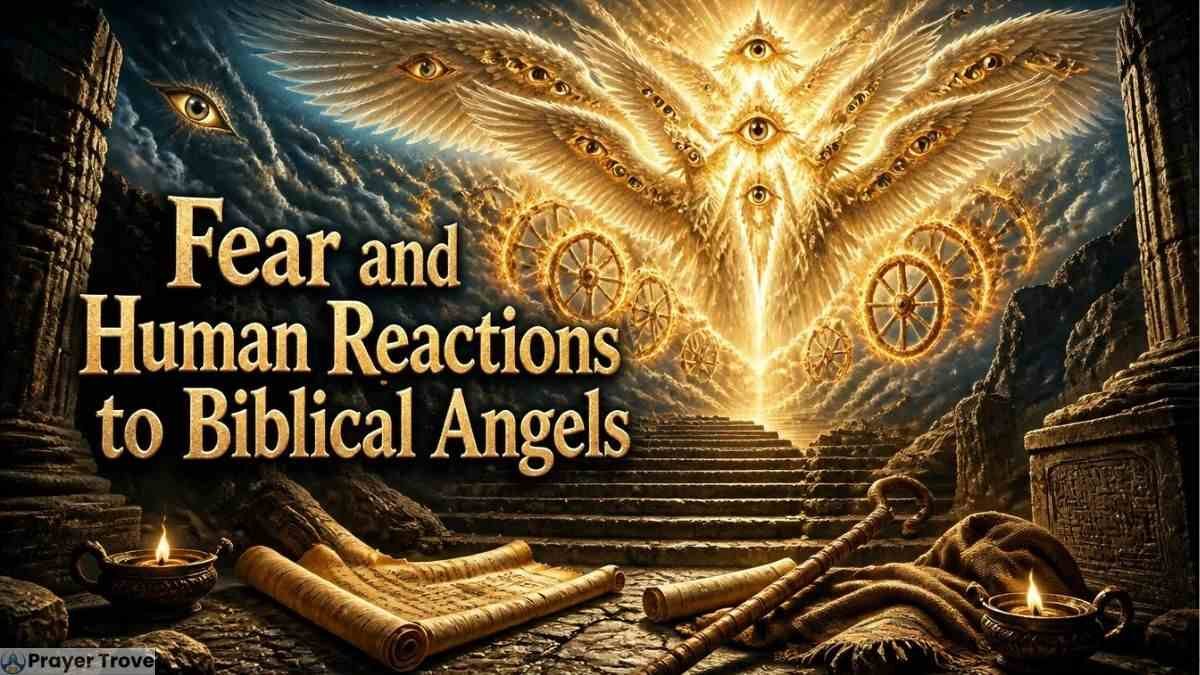
One of the clearest signs that biblical angels look nothing like gentle greeting-card figures is how people react when they appear.
The Meaning of “Do Not Be Afraid”
Angels frequently open their messages with some version of “do not be afraid” or “fear not.” Gabriel says this to Mary in Luke 1:30, and an angel says the same to the shepherds in Luke 2:10. This phrase exists because people’s first reaction to an angel was rarely calm curiosity.
Human Reactions to Angelic Encounters
- Falling face down on the ground (Daniel 10:9)
- Becoming like dead men from shock (Matthew 28:4)
- Trembling and covering their faces
- Feeling overwhelming terror before hearing a single word
The Overwhelming Presence of Biblical Angels
These reactions suggest that an angel’s presence alone, before it even speaks, can be overwhelming to human senses. This lines up with the unusual and often powerful descriptions given throughout Scripture, rather than the gentle imagery found in popular culture.
Michael and Gabriel in the Bible
Out of the many angels mentioned in Scripture, only two are given clear personal names in most Bibles, and each one carries out a very different kind of work.
Michael the Archangel and Warrior
Michael is called a “chief prince” in Daniel 10:13 and is directly named an archangel in Jude 1:9. His role centers on protection and conflict, particularly on behalf of Israel and against spiritual opposition.
Gabriel the Divine Messenger
Gabriel’s appearances line up with major turning points in the biblical story. He explains prophetic visions to Daniel (Daniel 8:16, 9:21), and later announces the births of both John the Baptist and Jesus (Luke 1:11-38).
The Biblical Roles of Michael and Gabriel
| Angel | Main Function | Key Passages |
|---|---|---|
| Michael | Warfare, protection | Daniel 10, 12; Revelation 12 |
| Gabriel | Messages, revelation | Daniel 8-9; Luke 1 |
Biblical Evidence About Their Appearance
Scripture never gives a detailed physical description of either Michael or Gabriel. Their significance comes from their actions and titles, not from how they look. This is different from beings like seraphim or cherubim, whose appearance is described in detail.
The Roles and Functions of Angels
| Role | Example |
|---|---|
| Messengers | Announcing Jesus’ birth (Luke 1-2) |
| Worshippers | Seraphim praising God (Isaiah 6) |
| Protectors | Guarding Daniel from lions (Daniel 6:22) |
| Agents of judgment | Striking down Herod (Acts 12:23) |
Angels as God’s Messengers
Delivering messages is one of the most common angelic tasks in Scripture. The Hebrew and Greek words for angel both mean “messenger,” which reflects how central this role is to what angels do.
Angels as Worshippers of God
Passages like Isaiah 6 and Revelation 4 show angels continually worshipping around God’s throne, focused entirely on his holiness rather than drawing attention to themselves.
Angels Serving and Protecting God’s People
Angels step in to help and protect people throughout Scripture, from shutting the mouths of lions around Daniel (Daniel 6:22) to freeing Peter from prison chains (Acts 12:7).
Angels Carrying Out God’s Judgment
Angels also carry out judgment when God commands it. 2 Kings 19:35 describes an angel striking down a large invading army in a single night, while Acts 12:23 describes an angel striking down King Herod after he accepted worship that belonged only to God.
Angels in the Life and Ministry of Jesus
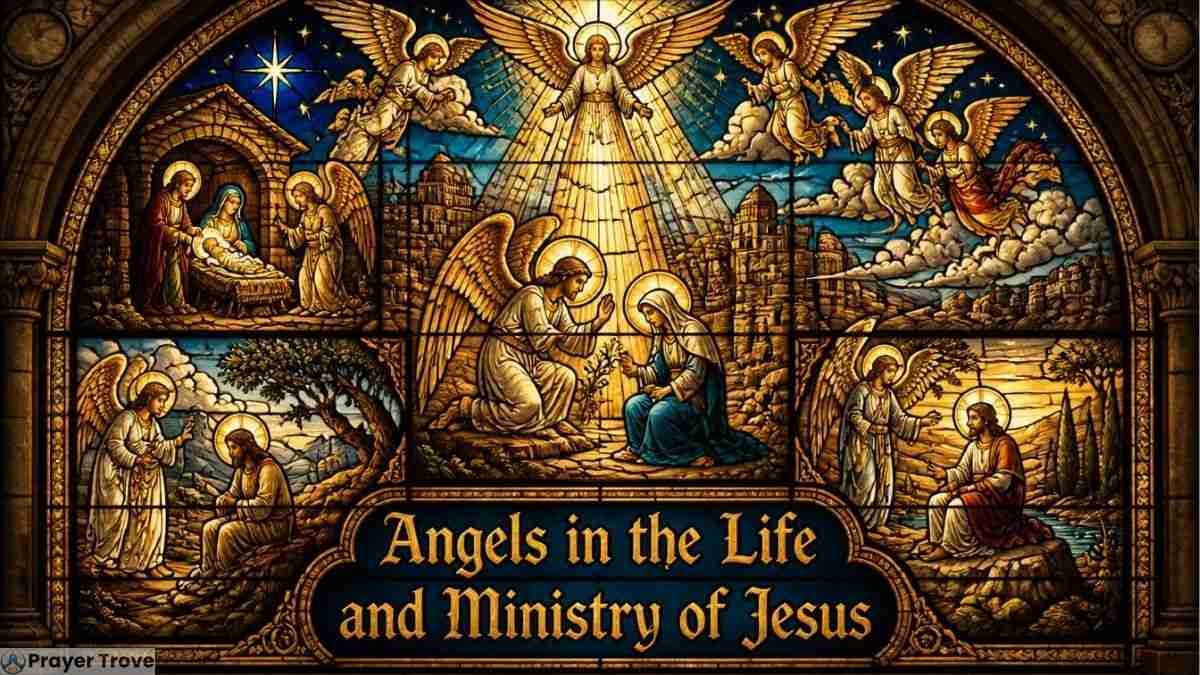
Angels appear at nearly every major point in Jesus’ life, from before his birth to his promised return.
Angels Announcing the Birth of Jesus
Gabriel announces Jesus’ coming birth to Mary in Luke 1:26-38. Later, an angel appears to Joseph in a dream, telling him not to be afraid to take Mary as his wife (Matthew 1:20).
Angels Ministering to Jesus
After Jesus is tempted in the wilderness, angels come to care for him (Matthew 4:11). Later, during his intense prayer in Gethsemane, an angel appears to strengthen him (Luke 22:43).
Angels at the Resurrection
An angel rolls away the stone from Jesus’ tomb and announces that he has risen (Matthew 28:2-6). The guards standing watch are so afraid that they become like dead men.
Angels at the Ascension
As Jesus ascends into heaven, two angels appear to the watching disciples, asking why they are staring into the sky, and promising that Jesus will return the same way he left (Acts 1:10-11).
Angels at the Return of Christ
Jesus teaches that angels will accompany him when he returns, helping to gather his people and carry out final judgment (Matthew 13:41, 25:31).
Angels in the Book of Revelation
| Event | Passage |
|---|---|
| Seven trumpets | Revelation 8-11 |
| Seven bowls of wrath | Revelation 16 |
| Michael’s battle | Revelation 12 |
| Satan bound | Revelation 20 |
Angels Around God’s Throne
Revelation 4 describes four living creatures continually worshipping around God’s throne, echoing the imagery from Ezekiel’s vision centuries earlier.
The Seven Angels With Seven Trumpets
Seven angels sound trumpets in sequence, each one triggering a specific judgment on the earth, from hail and fire to darkened skies (Revelation 8-9).
Angels Carrying Out Divine Judgment
Later, seven angels pour out bowls representing the final stage of God’s judgment before Christ’s return, described in Revelation 16.
Michael’s Battle Against the Dragon
Revelation 12:7-9 describes Michael and his angels fighting against a dragon identified as Satan, defeating him and casting him out of heaven completely.
The Angel Binding Satan
Revelation 20:1-3 describes an angel binding Satan with a chain and locking him away for a thousand years, showing angelic authority even over the most powerful fallen being.
Guardian Angels and Divine Protection
The idea of a guardian angel assigned to every person is common in popular belief, but Scripture’s actual teaching is more limited than many people assume.
Biblical Teaching About Guardian Angels
Psalm 91:11 says God will command his angels to guard a person “in all your ways.” This supports the idea of angelic protection, though it doesn’t clearly state that each person receives one specific, permanent angel.
Angels Protecting and Serving God’s People
Matthew 18:10 mentions that children have angels who “always see the face” of God in heaven. Acts 12:15 shows early believers assuming Peter had a personal angel, showing this belief existed among first-century Christians, even if Scripture doesn’t spell out the exact system.
Angels Assigned to Nations and Groups
Daniel 10 describes spiritual “princes” connected to nations like Persia and Greece, with Michael identified as the prince who defends Israel specifically. This suggests some angelic assignments cover entire groups of people, not only individuals.
Biblical Evidence and Popular Beliefs About Guardian Angels
| Popular Belief | Biblical Support |
|---|---|
| Everyone has one personal angel | Not clearly confirmed |
| Angels can protect people | Supported (Psalm 91:11) |
| Children may have angels representing them | Suggested (Matthew 18:10) |
| Angels can be assigned to nations | Supported (Daniel 10) |
Fallen Angels and Spiritual Rebellion
Not every angel in the Bible remains loyal to God. Understanding fallen angels helps complete the picture of what Scripture teaches about the angelic world.
Satan and the Rebellion Against God
Ezekiel 28:12-19, written as a message about the king of Tyre, is widely understood by many interpreters as also describing Satan’s original glory and his fall through pride. Isaiah 14:12-15 describes a similar prideful ambition, often connected to the same figure. Because both passages are addressed primarily to human kings, connecting them to Satan is an interpretation held widely across church history rather than something the text states outright.
Fallen Angels and Demons
| Category | Description | Key Passage |
|---|---|---|
| Satan | Leader of the rebellion | Ezekiel 28, Isaiah 14 |
| Bound angels | Angels held in chains awaiting judgment | Jude 6, 2 Peter 2:4 |
| Demons | Unclean spirits active in the world | Mark 1:24, Mark 5:1-20 |
Angels Who Sinned Against God
2 Peter 2:4 and Jude 6 both describe angels who “did not keep their proper position” and are now held in chains of darkness, waiting for judgment. This shows that some fallen angels are currently restricted, while others, like the demons described in the Gospels, remain active.
Fallen Angels vs Holy Angels
| Holy Angels | Fallen Angels |
|---|---|
| Serve God’s purposes | Oppose God’s purposes |
| Bring truth and help | Deceive and harm |
| Worship God continually | Rebelled through pride |
| Free to serve throughout Scripture | Some bound in chains, others active as demons |
Common Myths About Biblically Accurate Angels
| Myth | What Scripture Actually Says |
|---|---|
| All angels have two wings | Wing count varies; some have none mentioned, others have four or six |
| Angels used to be humans | Angels are a separate created order, not deceased people |
| Every angel looks gentle and calm | Many angel encounters cause fear and shock |
| Cherubim are chubby babies | Cherubim have four faces and act as guardians |
| Everyone has one personal guardian angel | Scripture supports angelic protection but doesn’t confirm a fixed system |
| Angels can act completely on their own | Angels consistently act under God’s authority and command |
Key Bible Passages About Angels
| Book | What It Shows |
|---|---|
| Genesis | Cherubim guarding Eden; angels visiting Abraham and Lot |
| Isaiah | Seraphim worshipping at God’s throne |
| Ezekiel | Cherubim, living creatures, and wheel angels |
| Daniel | Michael and Gabriel; angelic princes over nations |
| Gospels | Angels announcing and surrounding Jesus’ life |
| Revelation | Angels of judgment and the defeat of Satan |
Angels in Genesis
Genesis introduces cherubim guarding Eden (Genesis 3:24) and shows angels appearing as men to Abraham and Lot (Genesis 18-19), setting the pattern for many later angelic appearances.
Seraphim in Isaiah
Isaiah 6 gives the Bible’s only detailed look at seraphim, describing their six wings, their fiery nature, and their constant proclamation of God’s holiness.
Cherubim and Living Creatures in Ezekiel
Ezekiel gives the most detailed and unusual angel descriptions in the entire Bible, including four-faced living creatures, wheels covered in eyes, and their later identification as cherubim.
Angels in Daniel
Daniel features named angels acting directly in history, including Gabriel explaining prophetic visions and Michael defending Israel against opposing spiritual forces.
Angels in the Gospels
The Gospels show angels present at the announcement of Jesus’ birth, his temptation, his agony in Gethsemane, and his resurrection, tying angelic activity directly to the major events of his life.
Angels in Revelation
Revelation shows angels at their most active, sounding trumpets, pouring out judgment, fighting Satan, and ultimately binding him before the final judgment.
Related Post : Biblically Accurate Lucifer
The Biblical Reality of Angels
Put together, these passages show angels as purposeful, powerful beings who exist to serve God rather than to look impressive or comforting to people. Their appearance changes depending on their task, ranging from ordinary human visitors to overwhelming, multi-faced guardians. What stays consistent is their complete focus on carrying out God’s will, whether that means delivering a message, guarding a holy place, or executing judgment.
Related Post : Biblically Accurate God
Conclusion
Biblical angels are far more varied and far less predictable than the calm, winged figures found in popular art. Some look like ordinary people. Others have faces of lions and eagles, bodies covered in eyes, or wings that cover their own faces in reverence. What connects all of them is their role: serving God fully, without hesitation, in whatever form that service requires. Reading their actual descriptions in Scripture gives a clearer, and often more striking, picture than the familiar images most people grew up with.
FAQs
What do biblically accurate angels actually look like?
They vary widely. Some appear as ordinary men, while others, like seraphim and cherubim, have multiple wings, several faces, or bodies covered in eyes.
Do all angels have wings in the Bible?
No. Many general angels appear in human form with no wings mentioned at all. Wings are specifically described for beings like seraphim and cherubim.
Why do angels tell people not to be afraid?
Because their appearance often overwhelmed people. Angels open with “do not be afraid” to calm witnesses before delivering their message.
Are cherubim really chubby babies?
No. That image comes from art traditions, not the Bible. Biblical cherubim have four faces and serve as guardians of holy places.
Who are the named angels in the Bible?
Michael and Gabriel are the two angels named directly in most Bibles. Some traditions also include Raphael, who appears in the Book of Tobit.
Does the Bible confirm that everyone has a guardian angel?
Not clearly. Scripture supports the idea of angelic protection, but it doesn’t spell out a fixed, one-angel-per-person system.