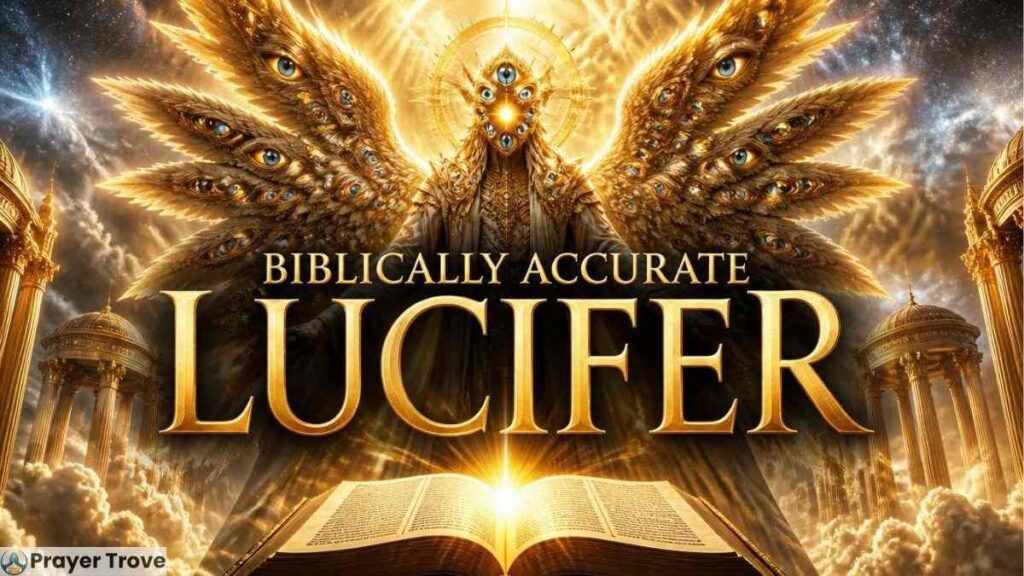
What does Lucifer look like according to the Bible? Many people picture a red creature with horns, a tail, and a pitchfork. But that image comes mostly from art, folklore, and theater, not from Scripture. A Biblically Accurate Lucifer is harder to describe than popular culture suggests. The Bible never gives one complete physical portrait of Lucifer. It uses symbolic language, and it often speaks about human kings in passages that later Christian tradition applied to a fallen angel. This article explains what Scripture actually says, what it does not say, and why the difference matters.
What Does Lucifer Look Like According to the Bible?
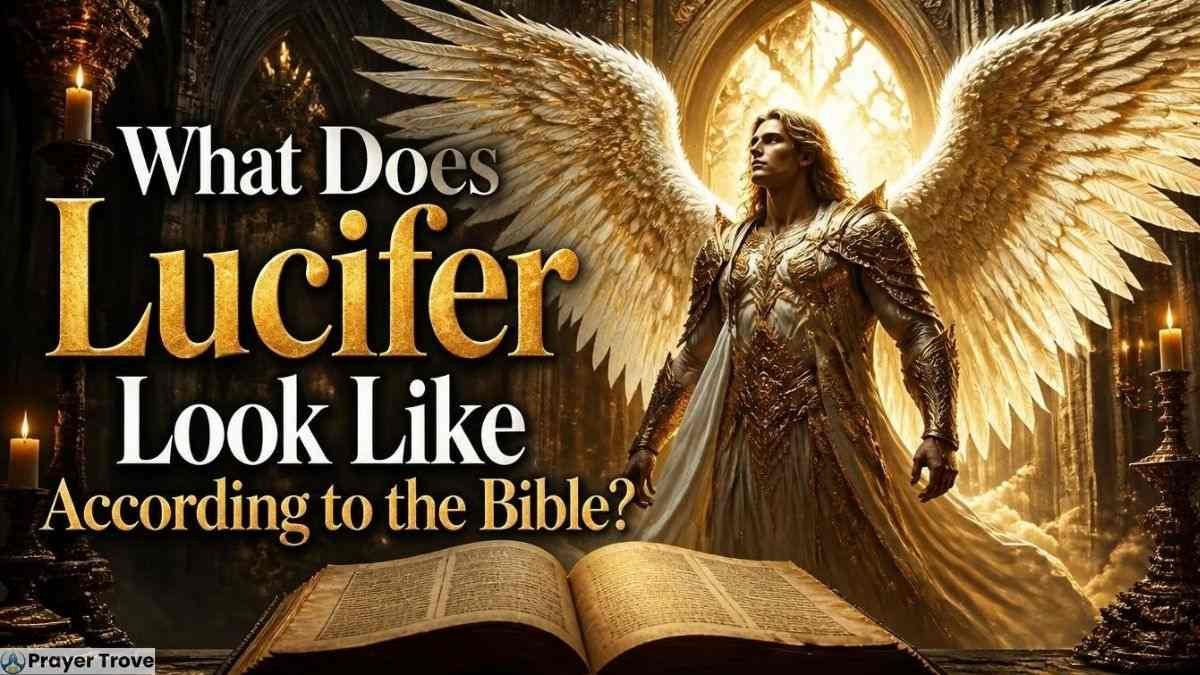
The Bible does not describe Lucifer’s face, skin color, hair, height, or body in any direct way. The name “Lucifer” appears only in the King James Version of Isaiah 14:12. There, it translates a Hebrew word for the morning star. The passage is a taunt against the king of Babylon. Ezekiel 28 uses rich images of beauty, precious stones, and a guardian cherub, but it is addressed to the king of Tyre. Traditional Christian reading connects these passages to Satan, but the text itself does not provide a literal physical description. So the honest answer is: Scripture does not give a complete picture of what Lucifer looks like.
Lucifer’s Original Appearance Before the Fall
Traditional Christian interpretation often says Lucifer was beautiful and glorious before he fell. This idea comes mainly from Ezekiel 28, where a figure is called “the seal of perfection, full of wisdom and perfect in beauty” (Ezekiel 28:12, paraphrased). The same passage mentions precious stones, gold, and a guardian cherub on God’s holy mountain. But the original prophecy speaks to the king of Tyre. It uses symbolic language to describe pride and judgment. It does not give a physical portrait of a fallen angel. So even the “before the fall” appearance is based on interpretation, not a direct biblical description.
Biblical Descriptions of Lucifer’s Beauty and Glory
The Bible describes beauty and glory in symbolic ways. Isaiah 14:12 calls the figure the “morning star, son of the dawn” in many modern translations. That image points to the planet Venus, which shines brightly before sunrise and then fades. Ezekiel 28 mentions nine precious stones, gold settings, and fiery stones. These images show high status, splendor, and nearness to God. They do not describe eyes, wings, clothing, or a physical body. They are pictures of honor and pride, not a photograph of Lucifer.
Is Lucifer Described as an Angel, Cherub, or Morning Star?
| Term | Where It Appears | What It Means | How It Relates to Lucifer |
|---|---|---|---|
| Lucifer | Isaiah 14:12 (KJV) | Latin word for “light-bearer” or morning star | Used only in the KJV as a proper name in this verse |
| Helel ben Shachar | Isaiah 14:12 (Hebrew) | “Shining one, son of dawn” | Refers to the morning star, likely Venus |
| Morning star | Isaiah 14:12 (modern translations) | A bright star seen before dawn | A symbol of glory that fades |
| Anointed cherub | Ezekiel 28:14, 16 | A guardian figure near God | Traditional reading applies this to Lucifer |
| Satan | Many verses | Hebrew word meaning “adversary” or “accuser” | The New Testament never uses “Lucifer” for Satan |
The Bible does not call Lucifer an angel by that name. It uses “cherub” in Ezekiel 28, but the passage is about the king of Tyre. “Morning star” is imagery, not a physical description. Christian tradition later combined these ideas into one fallen angel.
What Does the Bible Say About Lucifer’s Wings?
The Bible says nothing about Lucifer’s wings. It never describes him with feathered wings or bat wings. Cherubim are described with wings in some visions, such as Exodus 25:18–22 and Ezekiel 10. Seraphim have six wings in Isaiah 6. But those passages are about specific angelic beings in visions. They are not applied to Lucifer. The familiar bat-like wings come from later art and literature, especially Dante’s Inferno, not from Scripture.
Does Lucifer Have a Red Face, Horns, or a Tail?
| Feature | Popular Image | Biblical Basis |
|---|---|---|
| Red face or skin | Common in cartoons, costumes, and opera | None |
| Horns | Often shown on devils | None for Lucifer |
| Tail | Common in art and Halloween images | None |
| Pitchfork | Popular devil symbol | None |
| Bat wings | Seen in medieval and later art | None in the Bible |
These features developed over centuries through art, folklore, and stage traditions. They are not found in the Hebrew or Greek Scriptures. A Biblically Accurate Lucifer should not be confused with the red devil of popular culture.
Who Is Lucifer in the Bible?
The English name “Lucifer” comes from Latin, not Hebrew. In the Hebrew Bible, Isaiah 14:12 uses the word Helel, part of the phrase Helel ben Shachar. The King James Version translated this as “Lucifer.” Most modern translations use “morning star,” “day star,” or “shining one.” The passage is a prophecy against Babylon and its king. It is not a direct story about Satan. The name “Lucifer” became a proper name for Satan through later tradition, not through clear biblical statement.
The Meaning of Lucifer in the Latin Bible
Jerome translated the Bible into Latin in the late fourth century. This translation is called the Vulgate. When he came to Helel in Isaiah 14:12, he used the Latin word lucifer, meaning “light-bearer.” In Latin, Lucifer was also used for the morning star. It was not originally a name for Satan. Jerome’s choice was a translation, not a new doctrine. But because the word looked like a name, later readers treated it as one.
What Does Helel Ben Shachar Mean in Hebrew?
Helel comes from a root that can mean “to shine” or “to boast.” Ben Shachar means “son of dawn” or “son of the morning.” Together, Helel ben Shachar means something like “shining one, son of dawn.” It refers to the morning star, the planet Venus. Venus is bright and impressive, but it fades when the sun rises. The image fits a proud king who seems great but is brought down. The word Helel appears only once in the Hebrew Bible, in Isaiah 14:12.
How Isaiah 14:12 Became Associated With Lucifer
Early Christian writers began to read Isaiah 14 as more than a prophecy about Babylon. Origen of Alexandria, in the third century, treated the fall language as a picture of Satan’s fall from heaven. Medieval theologians linked Isaiah 14, Ezekiel 28, and Revelation 12 into one story of angelic rebellion. Dante’s Inferno and Milton’s Paradise Lost made this story famous. Over time, many Christians assumed the connection was explicit in the Bible, even though it developed through tradition.
How the King James Bible Popularized the Name Lucifer
The King James Version of 1611 kept the Latin word “Lucifer” in Isaiah 14:12. It reads, “How art thou fallen from heaven, O Lucifer, son of the morning!” (KJV). Because the word was capitalized and treated as a name, English readers often assumed the passage was about Satan. Most modern translations do not use “Lucifer” there. They translate the Hebrew as “morning star” or “day star.” The KJV helped make the name “Lucifer” part of English Christian tradition.
Is Lucifer the Same as Satan in the Bible?
| Question | What Scripture Says | Traditional View |
|---|---|---|
| Does the New Testament use “Lucifer”? | No | Tradition uses it as a name for Satan |
| Does the Bible call Satan “Lucifer”? | No | Many Christians equate them |
| What is Isaiah 14 about? | A taunt against the king of Babylon | Often read as Satan’s fall |
| What is Ezekiel 28 about? | A prophecy against the king of Tyre | Often read as Lucifer’s fall |
| What does Revelation 12 call the dragon? | The devil, or Satan | Often connected to Lucifer |
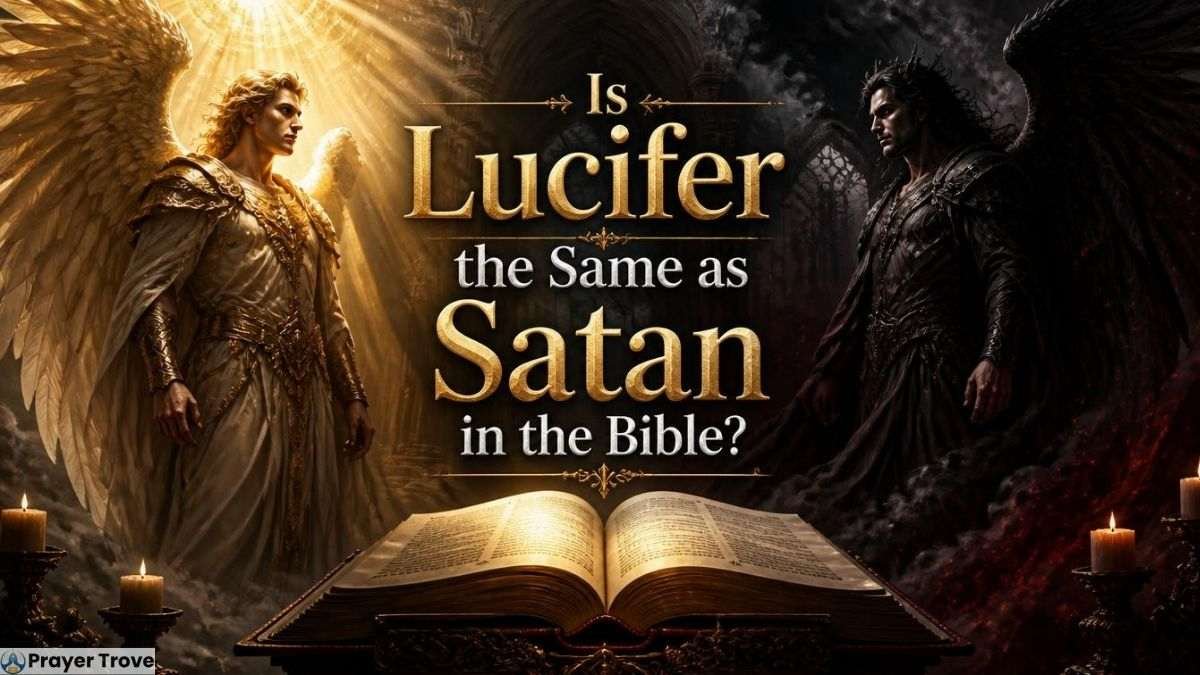
Scripture does not explicitly say “Lucifer is Satan.” The equation is a traditional interpretation. It may be true in a broader theological sense, but it is not stated in the text in those terms.
Biblical Passages Commonly Used to Connect Lucifer and Satan
Several passages are used to connect Lucifer and Satan. Isaiah 14:12 speaks of the morning star falling from heaven. Ezekiel 28 describes a beautiful cherub who is cast out because of pride. Revelation 12:7–9 tells of a war in heaven where the dragon is called the devil and Satan. Luke 10:18 records Jesus saying, “I saw Satan fall like lightning from heaven” (paraphrased). These passages share themes of pride, fall, and conflict. But they do not all use the same name or clearly refer to the same event. The connection is made by interpretation.
How Christian Tradition Connected Lucifer to Satan
Origen was among the first to apply Isaiah 14 to Satan. Later medieval writers combined Isaiah 14, Ezekiel 28, and Revelation 12 into a single fall story. Dante and Milton gave this story powerful literary form. The King James Bible’s use of “Lucifer” linked seem obvious to English readers. By the Victorian era, the red devil image had become common in opera and popular entertainment. Tradition, not explicit Scripture, drove this development.
Why Some Biblical Scholars Disagree With This Interpretation
| Reason | Explanation |
|---|---|
| Original context | Isaiah 14 addresses Babylon’s king; Ezekiel 28 addresses Tyre’s king |
| Hebrew wording | Helel means morning star, not a personal name for Satan |
| New Testament usage | The NT never calls Satan “Lucifer” |
| “Satan” as a title | The word means “adversary” or “accuser,” often used as a role |
| Reformers’ view | Calvin and Luther rejected applying Isaiah 14 directly to Satan |
| Literary development | Dante and Milton shaped the popular story, not the biblical text |
Scholars who disagree do not deny that Satan is real. They argue that the Bible does not make the Lucifer–Satan equation as clearly as tradition suggests.
What Does Ezekiel 28 Reveal About Lucifer’s Appearance?
Ezekiel 28 is a prophecy against the king of Tyre. It uses images of Eden, precious stones, and a guardian cherub. Many Christian readers apply this passage to Lucifer’s fall. But the text itself is addressed to a human ruler. The imagery is symbolic and poetic. It reveals pride, beauty, and judgment. It does not give a literal physical description of Lucifer’s body.
The King of Tyre and the Passage’s Historical Context
Tyre was a wealthy and proud city. Its king became a symbol of arrogance. Ezekiel 28:1–10 announces judgment on the prince of Tyre for claiming to be a god. Then verses 11–19 lament the king of Tyre with Eden-like imagery. The passage uses royal and priestly symbols. It is not a direct report about a fallen angel. Understanding this context is important before applying it to Lucifer.
The Description of Eden and the Garden of God
Ezekiel 28 speaks of Eden, the garden of God, and the holy mountain of God. It mentions fiery stones and a guardian cherub. These images show a position of great honor and closeness to God. They are not meant to describe a physical location in a modern sense. They are symbolic pictures of blessing, privilege, and responsibility. When applied to Lucifer by tradition, they suggest he once had a high and beautiful place before God.
Precious Stones, Beauty, and the Anointed Cherub
- The figure is called “the seal of perfection” (Ezekiel 28:12).
- He is described as full of wisdom and perfect in beauty.
- Nine precious stones are listed, set in gold.
- He is called an “anointed guardian cherub” or “anointed cherub.”
- He walked on God’s holy mountain among fiery stones.
- He was perfect in his ways until iniquity was found in him.
- The passage says his heart became proud because of his beauty.
- His wisdom was corrupted because of his splendor.
These details are often applied to Lucifer. But the original prophecy speaks to the king of Tyre. The language is poetic and symbolic, not a physical description.
Was Ezekiel 28 Describing Satan or the King of Tyre?
| View | Main Point | Evidence | Caution |
|---|---|---|---|
| Historical view | It describes the king of Tyre | The chapter names Tyre and its ruler | Does not directly mention Satan |
| Traditional view | It describes Lucifer/Satan’s fall | Eden, cherub, and pride imagery fit later tradition | Reads later theology into the text |
| Typological view | The king of Tyre is a type or pattern of Satan | Human pride mirrors cosmic rebellion | The text does not explicitly say this |
A careful reader can say that Ezekiel 28 gives powerful images of pride and fall. But it does not clearly describe Lucifer’s physical appearance.
How Did Lucifer Fall From Heaven?
The Bible does not give a single, clear story of Lucifer’s fall with a timeline and physical details. Instead, several passages are used together. Isaiah 14 speaks of a proud king who tries to rise above God. Ezekiel 28 speaks of a beautiful figure corrupted by pride. Revelation 12 speaks of war in heaven. Luke 10:18 mentions Satan falling like lightning. These passages share themes, but they are not all about the same person in their original contexts. The fall story is built from these texts and later interpretation.
Isaiah 14 and the Five Statements of Rebellion
- “I will ascend to heaven.”
- “I will raise my throne above the stars of God.”
- “I will sit enthroned on the mount of assembly.”
- “I will ascend above the tops of the clouds.”
- “I will make myself like the Most High.”
These five “I will” statements are in Isaiah 14:13–14. In context, they are spoken against the king of Babylon. Traditional Christian reading applies them to Lucifer’s pride. They show self-exaltation and the desire to take God’s place.
Ezekiel 28 and the Theme of Pride
Ezekiel 28:17 says, “Your heart became proud on account of your beauty, and you corrupted your wisdom because of your splendor” (paraphrased). This is the heart of the pride theme. The figure had beauty and wisdom, but he used them for self-glory. Traditional interpretation applies this to Lucifer. The passage does not describe his face or body. It describes the inner corruption of pride.
Does the Bible Explain When Lucifer Fell?
| Question | What the Bible Says | What Remains Unclear |
|---|---|---|
| When did Lucifer fall? | No date is given | The timing is not stated |
| Did it happen before Adam? | Not explicitly stated | Many assume it was before Genesis 3 |
| Does Luke 10:18 describe it? | Jesus speaks of Satan falling like lightning | It may refer to a past event or a symbolic victory |
| Does Revelation 12 describe it? | War in heaven and the dragon cast out | It is a symbolic vision with multiple themes |
| Is there a single timeline? | No | The Bible does not provide one |
The Bible does not give a clear chronology of Lucifer’s fall. Any timeline is based on inference and tradition.
Revelation 12 and the War in Heaven
Revelation 12:7–9 describes a war in heaven. Michael and his angels fight the dragon. The dragon is called “that ancient serpent, who is the devil, or Satan” (paraphrased). He is cast to the earth with his angels. This passage does not use the name Lucifer. It is a symbolic vision. Many Christians connect it to Lucifer’s fall, but the text itself does not make that identification.
Did One-Third of the Angels Follow Satan?
Revelation 12:4 says the dragon’s tail swept a third of the stars from the sky and threw them to the earth. Since stars often represent angels in symbolic visions, many interpreters believe this means one-third of the angels followed Satan. Verse 9 identifies the dragon as Satan. But the text does not explicitly say “one-third of the angels followed Satan.” It is a common interpretation, not a direct statement. The passage is symbolic and should be read with care.
What Might Lucifer Look Like After His Fall?
The Bible does not describe Lucifer’s appearance after his fall. It does not say he lost his beauty in a physical way. It does not say he has red skin, horns, or a tail. The New Testament presents Satan as a spirit being. He can appear in deceptive ways. So any claim about his current physical form goes beyond what Scripture actually says.
Does the Bible Say Lucifer Lost His Original Beauty?
The Bible does not directly say that Lucifer lost his original beauty. Ezekiel 28:17 says his heart became proud because of his beauty, and his wisdom was corrupted because of his splendor. But that passage is addressed to the king of Tyre. Traditional reading applies it to Lucifer. Even then, it speaks of inner corruption, not a change in physical appearance. So the idea that he became physically ugly is not clearly taught in Scripture.
Satan as an Angel of Light in 2 Corinthians 11:14
Second Corinthians 11:14 says that Satan masquerades as an angel of light. This means he can appear beautiful, good, and trustworthy. It does not describe his actual form. It warns that he can deceive people by looking like something holy. This verse is often used to suggest that Satan still has a glorious or attractive appearance, but the text does not give physical details.
What Scripture Reveals About Satan’s Appearance
- Satan is a spirit being, not flesh and blood (Ephesians 6:12).
- He can masquerade as an angel of light (2 Corinthians 11:14).
- He is called a serpent in Genesis 3 and Revelation 12, but this is symbolic.
- He is pictured as a dragon in Revelation 12:3, which is a vision.
- He is compared to a roaring lion in 1 Peter 5:8, which is a metaphor.
- The Bible never describes him with red skin, horns, a tail, or a pitchfork.
These images are symbolic or metaphorical. They are not meant to be a physical portrait.
What Remains Unknown About Lucifer’s Current Form
- His true form is not described.
- His face, skin color, and hair are not described.
- His height and body shape are not described.
- His clothing is not described.
- Whether he has wings is not stated.
- Whether he has a fixed physical form is not stated.
- How he appears when not masquerading is unknown.
Scripture leaves these details out. That silence should make us careful about confident visual claims.
Biblically Accurate Lucifer vs. Popular Depictions
| Feature | Popular Depiction | Biblical Text | Verdict |
|---|---|---|---|
| Red skin | Common in art and costumes | No description | Not biblical |
| Horns | Common devil image | No description for Lucifer | Not biblical |
| Tail | Common in cartoons and art | No description | Not biblical |
| Pitchfork | Popular devil symbol | No description | Not biblical |
| Bat wings | Medieval and later art | No description for Lucifer | Not biblical |
| Beautiful angel | Traditional pre-fall image | Symbolic beauty in Ezekiel 28 | Based on tradition |
| Morning star | Bright star imagery | Isaiah 14:12 | Biblical image |
| Spirit being | Not visible as flesh | Ephesians 6:12 | Biblical teaching |
A Biblically Accurate Lucifer is not the red monster of popular art. The Bible gives symbols, not a physical portrait.
The Origin of the Devil’s Red Skin, Horns, and Pitchfork
The red devil image did not come from the Bible. It developed over centuries through art, folklore, and theater. Medieval art often showed demons as grotesque mixtures of animals and humans. Later stage productions, especially in the Victorian era, used red costumes for visibility. Horns and pitchforks may have been influenced by various cultural images, but the exact origins are complex. What is clear is that these features are not found in Scripture.
How Medieval Christian Art Shaped Lucifer’s Image
Medieval Christian art often portrayed demons and Satan as ugly, frightening figures. Dante’s Inferno described Satan frozen in ice with bat-like wings. The Codex Gigas, a medieval manuscript, included a famous image of the devil with horns and claws. These images shaped how people imagined Lucifer. But they were artistic inventions, not biblical descriptions. They reflected the fears and religious lessons of their time.
John Milton’s Paradise Lost and the Romantic Lucifer
John Milton’s Paradise Lost (1667) changed the popular image of Lucifer. Milton portrayed him as a tragic, charismatic leader with beauty and eloquence. His famous line, “Better to reign in Hell than serve in Heaven,” made Lucifer an anti-hero for some readers. This literary portrayal influenced later art and literature. It is powerful, but it is not Scripture. Milton’s Lucifer is a poetic creation, not a biblical portrait.
Major Differences Between Biblical Texts and Modern Images
| Element | Modern Image | Biblical Text | Difference |
|---|---|---|---|
| Appearance | Red, horned, tailed | No physical description | Entirely extra-biblical |
| Wings | Bat wings | Not described for Lucifer | From later art |
| Beauty | Either monster or romantic rebel | Symbolic beauty in Ezekiel 28 | Interpretation, not portrait |
| Role | Cosmic villain | Satan as adversary and accuser | NT uses different terms |
| Fall | One clear story | Multiple symbolic passages | No single timeline |
The gap between the Bible and popular images is large. Readers should not confuse the two.
What Do Angels Actually Look Like in the Bible?
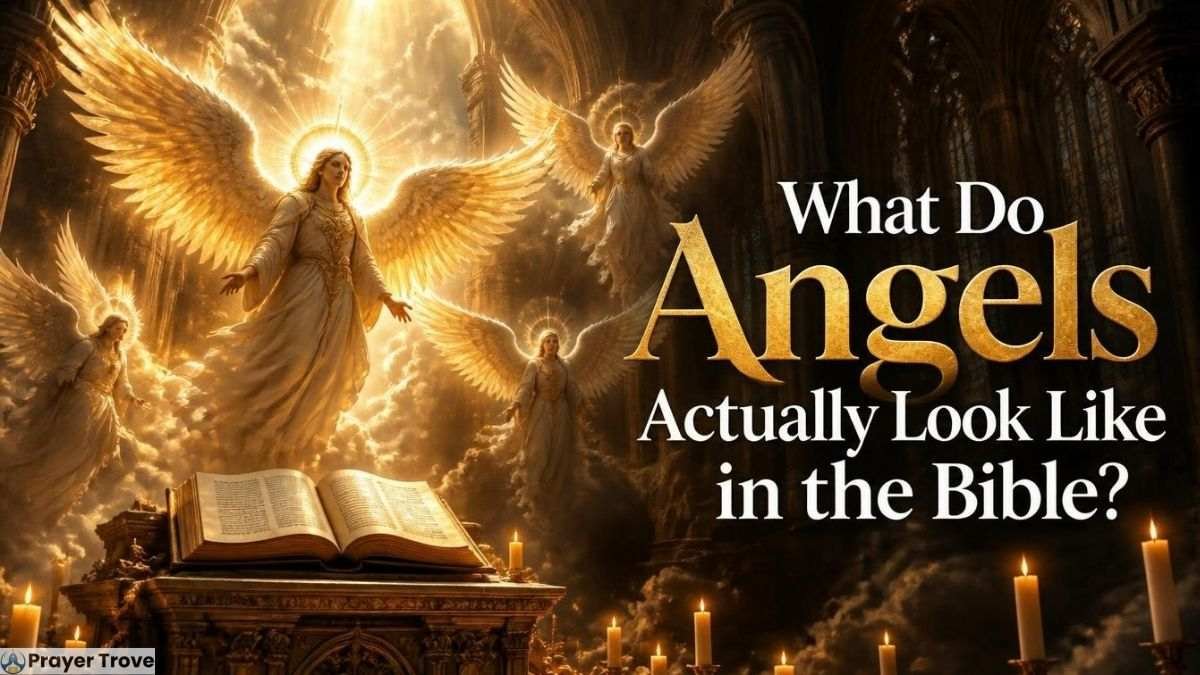
The Bible often shows angels appearing as men. For example, Genesis 18 and 19 describe heavenly visitors who look like humans. But other heavenly beings are described in strange, symbolic ways. Cherubim, seraphim, and the living creatures are not ordinary angels. Their descriptions are visionary and symbolic. They should not be combined to create a physical description of Lucifer. Each passage should be read in its own context.
Cherubim With Four Faces and Multiple Wings
- Cherubim appear in Ezekiel 1 and Ezekiel 10.
- They have four faces: a man, a lion, an ox, and an eagle.
- They have four wings.
- They have hands under their wings.
- They are connected with wheels and a fiery vision.
- Cherubim also appear on the ark of the covenant in Exodus 25:18–22.
- Their appearance is symbolic and majestic.
These descriptions are not about Lucifer. They are about cherubim in visions.
Seraphim With Six Wings in Isaiah 6
Isaiah 6:2 describes seraphim with six wings. Two wings cover their faces, two cover their feet, and two are used to fly. They call out, “Holy, holy, holy is the Lord Almighty” (paraphrased). They are close to God’s throne and serve in worship. The passage does not connect them to Lucifer. Their six wings should not be used to imagine Lucifer’s wings.
The Four Living Creatures in Ezekiel 1
- Ezekiel 1 describes four living creatures.
- Each has four faces and four wings.
- They have human hands under their wings.
- They sparkle like bronze and move with wheels.
- Fire and lightning move among them.
- They are part of a vision of God’s glory.
These creatures are not Lucifer. They are symbolic beings in a prophetic vision.
Why Biblical Angelic Descriptions Differ From Popular Artwork
| Reason | Explanation |
|---|---|
| Symbolic visions | Many descriptions are visions, not physical reports |
| Ancient imagery | They use images from the ancient world |
| Different beings | Cherubim, seraphim, and angels are not all the same |
| No physical portrait | The Bible is not trying to give photographs |
| Later art | Artists used imagination, culture, and drama |
| Popular culture | Costumes and movies made devils red and horned |
The Bible’s angelic descriptions are varied and symbolic. They should not be flattened into one popular image.
What Can Lucifer’s Story Teach About Pride?
The story of Lucifer, as traditionally told, is a warning about pride. Whether the passages are read as Babylon’s king, Tyre’s king, or a fallen angel, the theme is the same. Pride says, “I will rise. I will be like God.” Scripture says pride leads to a fall. Proverbs 16:18 says, “Pride goes before destruction, and a haughty spirit before a fall” (paraphrased). This lesson is for everyone.
How Beauty and Power Became Symbols of Pride
Ezekiel 28 connects beauty and wisdom with pride. The figure’s heart became proud because of his beauty. His wisdom was corrupted because of his splendor. This shows that good gifts can become idols. Beauty, intelligence, power, and position are not evil in themselves. But when they become the center of our identity, they can lead us away from God. The gift becomes a trap when we take credit for it and forget the Giver.
The Connection Between Lucifer’s Fall and Human Pride
Human pride works the same way. We may not be kings or angels, but we can still say in our hearts, “I will do what I want. I will make a name for myself. I will be like God.” Isaiah 14’s five “I will” statements show self-will and rebellion. They are a warning to every person. The desire to be independent from God is the root of pride. It leads to destruction, just as it did in the fall story.
Lessons About Humility, Obedience, and Free Will
- Humility is not thinking less of yourself; it is thinking about yourself accurately.
- Every good gift comes from God and should be used for His glory.
- Free will is a real gift, but it carries real risk.
- Pride can grow quietly in the heart before it shows in actions.
- Obedience is better than self-exaltation.
- God opposes the proud but gives grace to the humble (James 4:6, paraphrased).
- The fall story warns us to depend on God, not on our own strength.
These lessons apply to all people. The story of Lucifer is not just about a distant angel. It is a mirror for the human heart.
Conclusion
A Biblically Accurate Lucifer is not the red, horned, tailed figure of popular art. The Bible does not give a complete physical description of Lucifer. The name comes from the Latin Vulgate’s translation of the Hebrew word Helel in Isaiah 14:12. That passage speaks of the morning star and addresses the king of Babylon. Ezekiel 28 uses beautiful, symbolic imagery about the king of Tyre. Traditional Christian interpretation connects these passages to Satan, but the Bible does not explicitly make that equation. Scripture leaves many details unknown. What it does teach clearly is that pride leads to downfall. The wise response is humility, dependence on God, and careful attention to what the Bible actually says.
Frequently Asked Questions
What does the Bible say about Lucifer?
The Bible mentions Lucifer only in Isaiah 14:12, where the Hebrew word Helel means “shining one” or “morning star.” The passage describes a figure who fell from heaven through pride. In traditional Christian interpretation, this refers to a fallen angel, while other scholars see it primarily as a prophecy against the King of Babylon.
What are the differences between Lucifer and Satan in scripture?
“Lucifer” comes from a Latin translation of a Hebrew word meaning “morning star.” “Satan” is a Hebrew word meaning “adversary” or “accuser.” Whether they are the same being is a matter of traditional interpretation, not a direct statement from scripture. The traditional view connects them, but some scholars distinguish between the two.
Who was Lucifer before the fall?
According to traditional Christian interpretation, Lucifer was a high-ranking angelic being described in Ezekiel 28 as “the seal of perfection, full of wisdom and perfect in beauty.” He is understood as an anointed cherub who stood near God’s throne. Some scholars, however, interpret the passage as poetic language about the king of Tyre.
How did pride cause Lucifer’s fall?
In traditional interpretation, pride caused the figure to forget that his beauty, wisdom, and position were gifts from God. Ezekiel 28:17 says, “Your heart became proud on account of your beauty.” This pride led to rebellion and ultimately to his fall from heaven.
How did art change the perception of Lucifer?
Art transformed the biblical figure from a being of light and beauty into a red, horned monster. Medieval artists borrowed from various cultural sources. Dante and Milton created powerful literary images that shaped popular culture. Hollywood continued this trend, creating images far from the biblical description.
Related Reading :
Biblically Accurate God: What the Bible Really Says About God’s True Nature