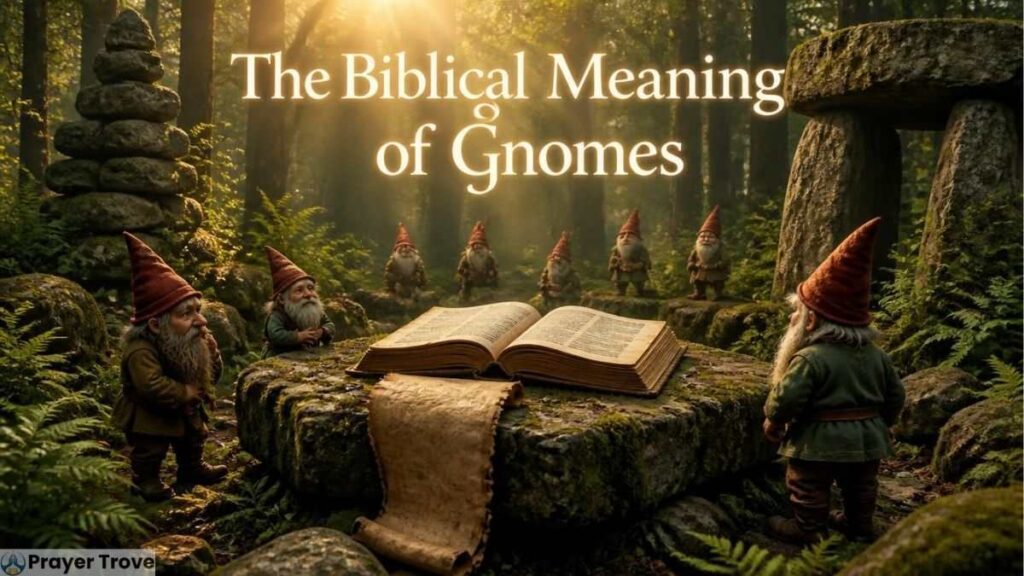
Have you ever walked past a little gnome sitting in someone’s garden and wondered if it means something more? Maybe you own one yourself, or maybe your neighbor’s yard is full of them. It’s a small thing, but if you’re a person of faith, even small things can raise big questions. You start to wonder: is this just cute yard art, or does it carry some hidden meaning I should know about?
This article walks through that question with you, step by step. We’ll look at what the Bible actually says, where gnomes really came from, and how you can think about them in a way that feels honest and peaceful. No fear, no guilt trips just clear answers so you can make up your own mind.
Biblical Perspective on Gnomes
The Bible never directly mentions gnomes, so there is no biblical meaning attached to them. Instead, Scripture teaches principles that help Christians evaluate all cultural symbols. Exodus 20:3–4 reminds believers to worship God alone and avoid placing anything above Him. Deuteronomy 18:10–12 warns about pagan and occult practices.
Colossians 2:8 tells Christians not to follow human traditions that mislead them. Romans 14 teaches believers to respect personal beliefs on issues not clearly stated in Scripture. Also, 1 John 5:21 reminds Christians to protect themselves from idols. These passages show that the Bible focuses on faith in God rather than on garden decorations or folklore.
Biblical References and the Absence of Gnomes
Bible scholars generally agree that Scripture never mentions gnomes or gives them any spiritual meaning. Most Christian traditions view garden gnomes as cultural decorations rather than biblical symbols. Scripture itself never mentions gnomes, so Christians should evaluate them using biblical principles about idolatry, superstition, and faith instead of folklore.
Why Gnomes Are Not Found in the Bible
- The Bible was written long before garden gnomes existed as we know them today.
- Gnomes come from European folk stories, not from Hebrew or early Christian writings.
- Scripture talks about spiritual dangers in general terms, not specific modern decorations.
- Any link between gnomes and idolatry is based on biblical principles, not a direct Bible verse.
Historical Origins of Gnomes
Gnomes did not originate from the Bible or early Christian teaching. They first showed up in European folklore. People thought small, earth-dwelling creatures protected nature, mines, and gardens. These stories became part of local traditions and later inspired the decorative garden gnomes seen today. Understanding this history helps explain why the Bible does not give gnomes any spiritual meaning. Scripture tells believers to check every belief against God’s truth. It’s better than just following human traditions or folklore.
European Folklore and Medieval Traditions
Medieval European folklore described gnomes as small beings connected with the earth and hidden treasures. These stories spread through Germany and other parts of Europe before becoming popular legends. However, they were never part of biblical teaching. Christians should recognize that these traditions come from cultural folklore, not from Scripture. The Bible calls believers to place their trust in God alone instead of legends or superstitions.
The Evolution of Garden Gnomes
The gnome you see in stores today looks nothing like those old folk tales. It went through a long journey from spooky forest myth to cheerful lawn decoration, and that change happened mostly through art, not religion.
From Folklore to Modern Decorations
- In the 1800s, German craftsmen began making clay garden figures shaped like these folklore creatures.
- Wealthy European gardens used them purely as decoration, not as worship objects.
- The trend spread to Britain and later to the United States.
- Movies, cartoons, and garden stores turned gnomes into a fun, harmless symbol rather than a spiritual one.
- Today, most people buy them simply because they look cute or funny.
Spiritual Symbolism Commonly Associated with Gnomes
Even though gnomes are mostly decorative now, some old beliefs still linger in people’s minds. It helps to see these ideas laid out clearly so you can judge them for yourself instead of guessing.
Protection, Luck, and Nature Beliefs
| Old Folk Belief | What It Claimed | Bible’s View on Trust |
|---|---|---|
| Gnomes protect gardens | Bring safety from harm | Safety comes from God, not objects (Psalm 121:7-8) |
| Gnomes bring good luck | Cause good fortune | Blessings come from God’s will (James 1:17) |
| Gnomes connect to earth spirits | Represent nature powers | God alone is Creator over nature (Genesis 1:1) |
Biblical Principles for Understanding Mythical Beings
The Bible doesn’t give us a list of “approved” or “banned” folklore creatures. Instead, it gives us principles ideas we can apply to anything, whether it’s a gnome, a lucky coin, or a superstition passed down in your family. The main principle is this: don’t place your trust or hope in things that were made by human hands.
Truth Versus Folklore
| Folklore Says | Bible Says |
|---|---|
| Objects can bring luck | God directs our steps (Proverbs 16:9) |
| Spirits live in nature and protect us | God alone watches over His people (Psalm 91:11) |
| Old traditions must be followed for safety | Faith, not tradition, brings peace (Proverbs 3:5-6) |
Christian Perspectives on Gnomes
Christians don’t all agree on this, and that’s okay. Some see a garden gnome as nothing more than a cheerful decoration, no different from a birdbath or a wind chime. Others feel uneasy about anything with folklore roots and choose to avoid it. Neither view makes someone a “better” or “worse” Christian. It comes down to your own conscience and what feels honest before God.
Decorative Objects and Personal Convictions
- If a gnome is just for fun and holds no special meaning to you, many believers see no issue with it.
- If it makes you feel uneasy or reminds you of superstition, it’s fine to remove it.
- Romans 14 reminds us that personal convictions on non-essential matters deserve respect.
- The goal isn’t to judge others, but to be at peace with your own choices.
Biblical Warnings About Idolatry and Superstition
The Bible does speak strongly against putting our faith in the wrong places. This isn’t really about gnomes specifically it’s about the human habit of trusting created things instead of the Creator. That’s the real warning worth paying attention to.
Worship Reserved for God Alone
Throughout Scripture, God asks His people to keep their devotion pure and undivided. Exodus 20:3-4 reminds us not to place anything above God, not because objects are magical, but because our hearts easily wander toward things we can see and touch. A garden gnome isn’t dangerous by itself. The danger only shows up if someone starts believing it holds real power.
Biblical Warnings About Idolatry and False Beliefs
It’s worth separating two things clearly: owning an object and trusting in an object. The Bible’s concern has always been about the second one. God isn’t worried about statues sitting in gardens. He’s concerned about hearts that quietly start relying on luck charms instead of prayer.
Biblical Discernment in Everyday Life
- Ask yourself honestly: do I believe this object protects me, or is it just decoration?
- Bring your worries to God in prayer instead of relying on luck.
- Teach children the difference between fun stories and real faith.
- Keep your home focused on peace, not fear of “bad luck.”
Gnomes in Modern Christian Culture
Today, most Christians simply don’t think twice about a gnome in the yard. It’s viewed the same as a pumpkin at Halloween or a rabbit at Easter fun, familiar, and mostly disconnected from its ancient origins. Culture moves faster than folklore, and gnomes have mostly become a symbol of humor and hospitality.
Home Decorations and Personal Faith
Your home decorations say very little about your actual faith. What truly matters is your daily walk with God your prayers, your honesty, and your kindness to others. A gnome sitting by your flowerbed isn’t competing with your relationship with God unless you allow it to. Faith is about the heart, not the yard.
Common Misconceptions About Gnomes
A lot of confusion around this topic comes from mixing up fiction with real spiritual danger. Let’s clear that up simply.
Fiction Versus Biblical Reality
| Common Myth | Biblical Reality |
|---|---|
| Gnomes are demonic beings | The Bible never names or describes gnomes |
| Owning one invites bad spirits | Spiritual danger comes from what you believe, not what you own |
| All folklore is sinful | Stories become an issue only when they replace trust in God |
Biblical Discernment for Christians and Gnomes
At the end of the day, this comes down to wisdom, not fear. The Bible encourages believers to think clearly and test things gently, without panic. You don’t need a rulebook for every lawn ornament. You need a heart that stays close to God.
Making Faith-Based Decisions
- Choose decorations that bring you peace, not anxiety.
- If something feels spiritually heavy to you, it’s fine to let it go.
- Keep your focus on prayer, gratitude, and trust in God each day.
- Remember that God cares more about your heart than your garden.
Conclusion
The Bible never mentions gnomes or gives them any spiritual meaning. Instead, Scripture teaches believers to worship God alone, reject superstition, and avoid placing trust in created objects. For most Christians, a garden gnome is simply a decoration, not an idol or a sin. What matters most is the condition of your heart and your faith in God. When you trust in Him, you can make wise and calm choices. These choices will be based on biblical principles instead of fear or myths.
Frequently Asked Questions
Is it a sin to have garden gnomes?
No, owning a gnome isn’t a sin. The Bible never mentions them. It only becomes a concern if you start believing the gnome brings luck or protection instead of trusting God for those things.
Where did garden gnomes originally come from?
Garden gnomes originated from old European folklore, especially in Germany. People told stories about small earth creatures, and later craftsmen turned these tales into clay garden statues in the 1800s.
Does the Bible mention gnomes or fairies?
No, the Bible does not mention gnomes, fairies, or similar folklore creatures. These come from cultural stories, not Scripture. The Bible focuses on faith, God’s power, and trusting Him alone.
Can Christians decorate with gnomes without guilt?
Yes, many Christians keep gnomes simply as fun decorations. As long as you’re not trusting them for luck or protection, most believers see no conflict with having them at home.
What does the Bible say about superstition?
The Bible teaches us to trust God, not lucky objects or superstitions. Verses like Proverbs 3:5-6 remind us to lean on God’s guidance instead of placing hope in charms or symbols.