FAFO means “F*** Around and Find Out.” It is internet slang that people use in texts, DMs, comments, captions, and posts when someone makes a risky, careless, or provocative choice and either is about to face the result or already has. The acronym can read as a friendly tease, a calm warning, a sarcastic comment on a failure, or a hard line in a conflict. This FAFO meaning guide explains how the term is used in private chats, on public platforms, and in different kinds of conversations, and how to read the tone when you see it.
What Does FAFO Mean?
FAFO is the acronym for the phrase “F*** Around and Find Out.” The core idea is that a person who behaves recklessly, ignores a clear limit, or provokes someone will learn the outcome firsthand. The phrase was used in spoken English before it became an acronym, and social media helped spread the short version. Its exact origin is unclear, and no single person or date can be reliably credited. The full form contains a swear word, so people often write it as an acronym or censor it as “F*** Around and Find Out.”
FAFO Meaning in Simple Words
In plain terms, FAFO means “You took a risk or ignored a warning, so now you see what happens.” It points at a choice and the result that follows it. It can refer to a result that has already happened or to one the writer expects. The words alone do not show whether the writer is amused, concerned, or angry. That depends on the situation around the message.
FAFO Meaning in Text Messages
In text messages, FAFO works as a short reaction. People use it in three common ways: to comment on a decision someone just shared, to respond to a plan that seems likely to go wrong, and as a quick comeback when another person pushes or provokes them. Because it replaces a full explanation, it often appears alone or at the end of a sentence. The same four letters can sound caring, teasing, or cold. Readers judge the tone from who sent it, what happened right before it, and signals such as emojis, laughing letters like “lol,” and punctuation.
FAFO in WhatsApp and DMs
Private chats are where FAFO is most personal, because both people usually know each other’s history and sense of humor. This is also why the same message can be funny in one chat and tense in another.
Example 1
Person A: I’m hiding my sister’s phone charger as a prank.
Person B: She’ll know it was you. FAFO.
Person B predicts the result before the prank is discovered. Because they know the sister, the tone is teasing and slightly cautionary.
Example 2
Person A: I’m replying to that rude message right now.
Person B: They will screenshot it and share it. FAFO.
Here FAFO is a serious piece of advice. Person B expects a real problem and uses the word to say “think before you send that.”
FAFO in Casual Texting
In everyday texts, FAFO usually sounds light. It reacts to small mistakes with low stakes, such as lost sleep or ruined shoes, and rarely carries real anger.
Example 1
Person A: I stayed up until 4 a.m. playing a game.
Person B: And class starts at 8. FAFO.
Example 2
Person A: I wore white shoes to the muddy field.
Person B: FAFO lol.
In both examples the result is obvious, and the writer is gently teasing. The “lol” in the second one marks the humor clearly.
FAFO Meaning on Social Media
On public platforms, people use FAFO to react to videos, online disputes, risky stunts, and drama. Viewers apply it to strangers, public clips, and viral moments rather than only to people they know. This changes the tone. It often sounds more detached, sarcastic, or humorous than it does in a private chat, because the writer has no personal stake. It spreads easily for practical reasons. It is short enough for a caption or comment, it fits the fast pace of scrolling, and anyone who watches a clip can understand the point without a long explanation. Repeated use under similar videos also made it a familiar reaction that people recognize quickly.
FAFO on TikTok and Instagram
Platform use usually falls into captions that label a clip and comments or replies that react to it.
Example 1 (TikTok caption)
“Said he could handle the hottest sauce. FAFO.”
Example 2 (Instagram comment)
Person A: Flew my drone in strong wind. It’s gone now.
Person B: Drone: gone. FAFO. 😭
The caption names the choice and hints at the outcome shown in the video. In the comment, the crying emoji adds sarcasm, and the writer reacts to a loss that has already happened.
FAFO in Comments and Posts
In comment sections, tweet-style posts, and reply threads, FAFO appears both as a prediction and as a self-description.
Example 1 (post)
“Told my team I’d fix the Wi-Fi without calling the provider. Now nobody has internet. FAFO.”
Example 2 (reply thread)
Person A: Parking in the no-parking zone for just five minutes.
Person B: Tow truck says hi. FAFO.
In the first example, the writer applies FAFO to themselves as a joke about their own mistake. In the second, a reply predicts the consequence of someone else’s plan. A self-directed FAFO is almost always humorous, while a FAFO aimed at someone else depends more on the tone of the thread.
How FAFO Is Used in Conversations
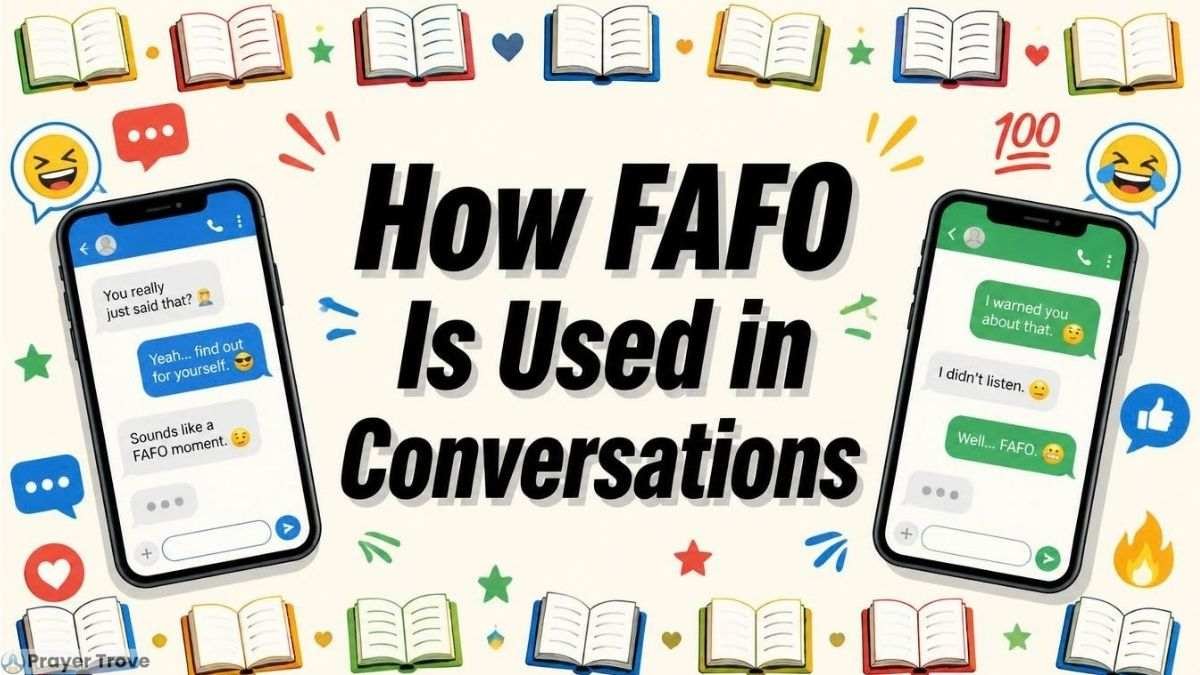
The meaning shifts with three factors. The first is the relationship. Between close friends, FAFO is often playful, while between people already in conflict it can sound sharp or dismissive. The second is timing. When sent before the consequence, it works as a warning or prediction. When sent after, it comments on something that already went wrong, often with sarcasm or amusement. The third is tone. Emojis, laughing letters, and casual wording point toward humor. A short, flat message with no humor, sent in response to something the reader just did, points toward seriousness or hostility.
FAFO Between Friends
Person A: I bet I can beat you at chess.
Person B: Checkmate in six moves. FAFO 😄
The friendly bet and the smiling emoji show that this is banter. Person B is teasing and enjoying the challenge, not threatening anything.
FAFO During Arguments
Person A: You keep joking about my work in the group chat.
Person B: Say it again. FAFO.
This sounds harsh for three reasons. There is no humor or emoji, the two people are already in conflict, and “Say it again” dares the other person to continue. Together these signals make FAFO read as a challenge.
FAFO Examples in Different Situations
| Situation | Example Message | Likely Tone |
|---|---|---|
| Lost bet in a group chat | “You said you’d run a marathon without training. FAFO.” | Teasing |
| Failed trick in a viral video | “Tried the rail with no pads. FAFO.” | Sarcastic |
| Sports talk | “Trash-talked the champions, then lost 5-0. FAFO.” | Mocking but playful |
| Online game | “Rushed in alone. FAFO.” | Casual, joking |
| Cooking mistake | “Doubled the chili without tasting. FAFO.” | Light, amused |
| Self-own | “Left my laundry in the washer for two days. FAFO on me.” | Self-mocking |
| Heated argument | “Keep spreading rumors and see what happens. FAFO.” | Aggressive |
FAFO as a Warning: Example
Person A: I’ll never back up my photos.
Person B: One phone crash and they’re gone. FAFO.
The message comes before any problem has happened. Person B names a specific risk, which makes this a caution and not a joke.
FAFO as a Joke: Example
Person A: I said I’d never get sunburned in the shade.
Person B: Look at your arms. FAFO 😂
The result has already happened, and the laughing emoji shows that Person B is amused, not concerned.
FAFO After Ignoring Advice
Person A: Mum told me to take an umbrella. I didn’t.
Person B: Soaked? FAFO.
Person B points out that the advice was ignored and the outcome was predictable. The tone is a mild “you were told so,” and it is not hostile.
FAFO After Crossing a Boundary
Person A: I borrowed Sam’s bike without asking. He’s furious.
Person B: He said no twice. FAFO.
FAFO works as a blunt reminder that a clear limit was set and ignored. The tone is firmer than in the umbrella example because someone else was affected by the choice.
Is FAFO a Warning, Threat, or Joke?
| Type | When It Fits | Tone Signals | Example |
|---|---|---|---|
| Warning | Before the result | Advice-like, calm, specific risk named | “Click that link and you’ll FAFO.” |
| Threat | During conflict | No humor, short, direct, aimed at a person | “Post that again. FAFO.” |
| Joke | After the result | Emojis, laughing letters, teasing caption | “Fell in the pond trying to pose. FAFO 🤣” |
FAFO as a Warning
As a warning, FAFO is sent before the consequence happens. The writer sees a risky plan or a repeated behavior and states, in one word, that a bad result is likely. It often reads like advice from someone who has seen a similar situation go wrong. The writer is usually not planning to cause the problem. They are pointing out that it is coming. Signs of this use include a calm tone, a message sent right after someone announces a plan, and a specific risk mentioned in the same message.
FAFO as a Threat
FAFO is not a threat by default. It becomes one when the writer seems to promise that they will respond themselves. Signs include an ongoing conflict, a cold or very short message, no humor or emojis, and a direct reply to something the other person just said or did. In those cases, FAFO can read as “keep doing this and I will respond.” The relationship matters too. The same message from a stranger during a dispute and from a friend during a game does not carry the same meaning. To judge it, look at who wrote it and what happened immediately before.
FAFO as a Joke
As a joke, FAFO comes after the consequence. It is common under memes, funny clips, and posts about small mistakes. The writer is not warning anyone. They are making a sarcastic or amused comment on something that already went wrong, and in many cases the target is the writer’s own mistake. Laughing emojis, playful captions, and hashtags are common signs. In viral clips, it works as a quick label that tells viewers the person in the video faced the outcome of their own choice.
Conclusion
FAFO is slang for “F*** Around and Find Out.” The words stay the same, but the message changes with timing, relationship, platform, and tone. Before the result, it usually works as a warning. After the result, it often works as a joke. During a conflict, with no humor and a direct target, it can read as a threat. Checking what happened before the message and looking for emojis or humor is the most reliable way to tell which one you are reading.
FAQs
What does FAFO stand for?
It stands for “F*** Around and Find Out.”
What does FAFO mean in text?
It means someone’s choice has led, or may lead, to a result they will not like. In text, it usually appears as a short reaction, a prediction, or a comeback.
Is FAFO a swear word?
The full phrase contains a swear word. Some people see the acronym as milder, while others still see it as rude.
Is FAFO always a threat?
No. Depending on the context, it can be a warning, a joke, or a hard line in a fight. It reads as a threat mainly when there is conflict, no humor, and a direct target.
Can FAFO be used about yourself?
Yes. People often use it as a joke about their own mistakes, such as “FAFO on me.”
Where did FAFO come from?
The phrase was used in spoken English before the acronym spread online, and social media helped popularize the short form. Its exact origin is unclear.
Related Topic :